
 Recently I’ve noticed that one of my posts is receiving many views. The post is about communication and leadership which I wrote after attending the Leadership for Community Engagement program. One of the program leaders was Dr Elizabeth Mellor and I wrote a summary of her ideas in a previous post which I have reposted below.
You, as a leader, will be different to a manager, you will be finding solutions, you will use your courage and confidence to influence others, you will speak a common language and find that common language so you can move forward. You will empower others and be an enabler so you can shift barriers. You will encourage others to ‘think big’ and work towards delivering transformational change. You will coach others on how to measure change, be respectful and a listener so you understand and collaborate.
You will not shy from anything and you will get in and learn. You will empower others to solve problems because you can’t fix it all. You will take risks and from taking risks you will gain experience to put into other aspects of your role. You will give others a voice and act on what they want and work side by side with them to achieve your common goals. You will be capable of ‘unlearning’ and not be judgmental. You will build a ‘treasury’ of good practice to help you evaluate actions and capture what has been learnt so you can measure the impact of changes and improvements.
And finally, you will deliver to every child and family. Your flexibility will be key to you being a leader, as without flexibility you will impede innovation. You, as a leader, must leave the profession in a better state and by building the capacity of others you should do yourself out of a job!
Cheers Nina
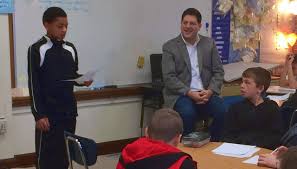 A Message from Steve Peha
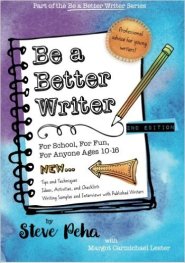
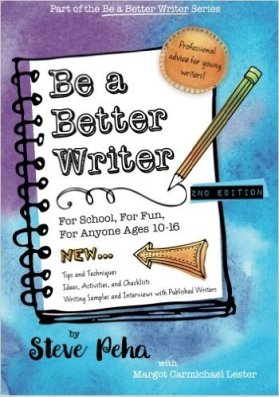
 I’ve been asked to explain how I review a piece of writing with a student. This is an interesting question. When conferencing a piece of writing, I’m not giving the writing a mark against standards. I’m looking for how to help the student be a better writer. I like to call it taking a global close look at the writing with the student. There is a risk of becoming too micro driven when teaching writing. This is one reason why I love Steve Peha’s book Be a Better Writer because Steve talks about the things which matter most.
 Secondly, when a student gives me a piece of writing to review the first thing I like the student to do is read their writing to me. This often prompts the student to make initial corrections and pose questions about their own writing. This is where I start asking the student simple questions. Why did you write about…? What structure did you use?



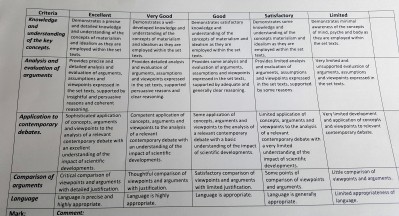 Mark and I reviewed the rubric for a Philosophy essay, particularly the language section. What does ‘Language is appropriate’ mean?
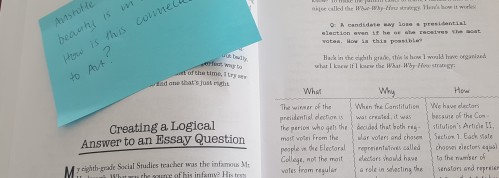
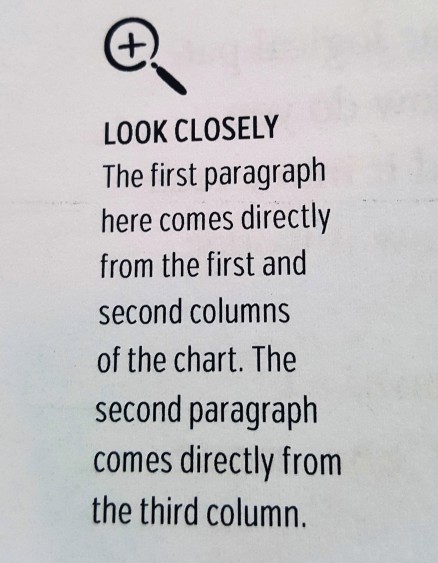
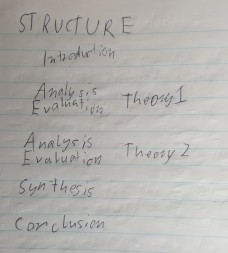 Using Steve’s What-Why-How? strategy has helped Mark to look closely at the question and answer the actual question. When students don’t read the question carefully and continue to write an essay on a different topic, there is a problem. The What-Why-How? helps to eliminate this.
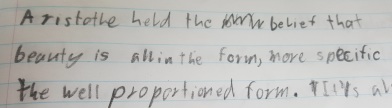
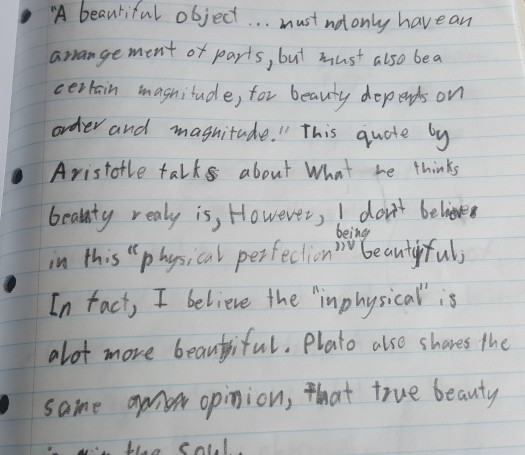
 Mark’s focus for our session was preparing for his Year 10 English test. He knew this test would entail writing an essay. Mark would be writing an essay on Scott Anderson’s Triage.
 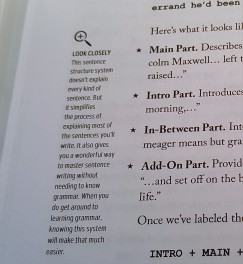 We have also been reviewing sentence structure. Chapter Seven focuses on Better Sentences and commences with the 10 things you need to know about sentences.
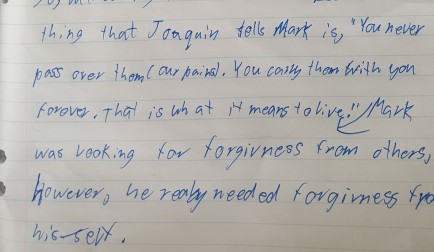
 Whilst putting this continuum together, I’ve been working with Mark on punctuation.

 Nina Davis: Teaching & Learning in Australia