Tag Archives: International Baccalaureate

Toy Story: An Inquiry into Toys by Prep Students – First Year of Formal Education in Australia.

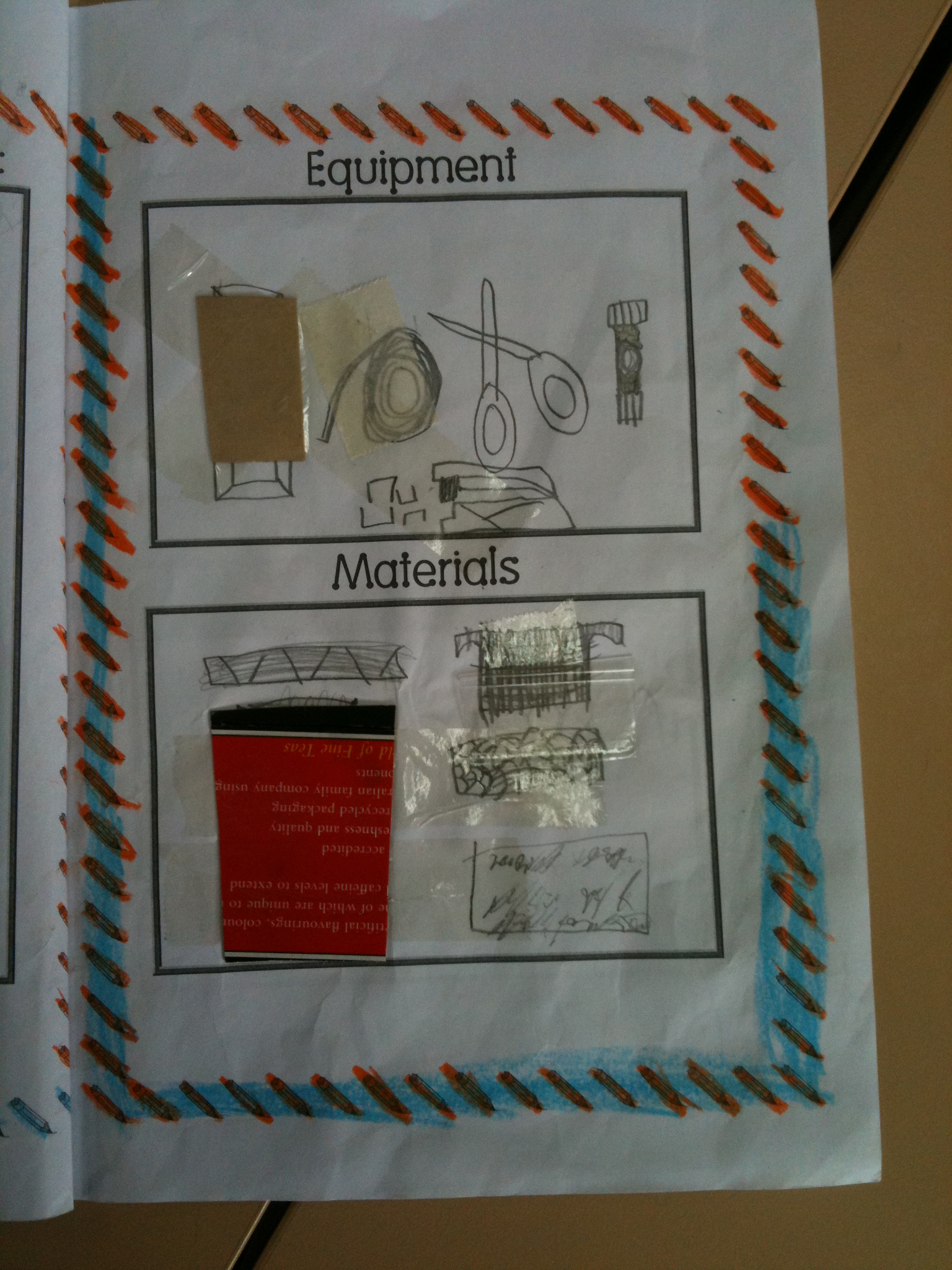
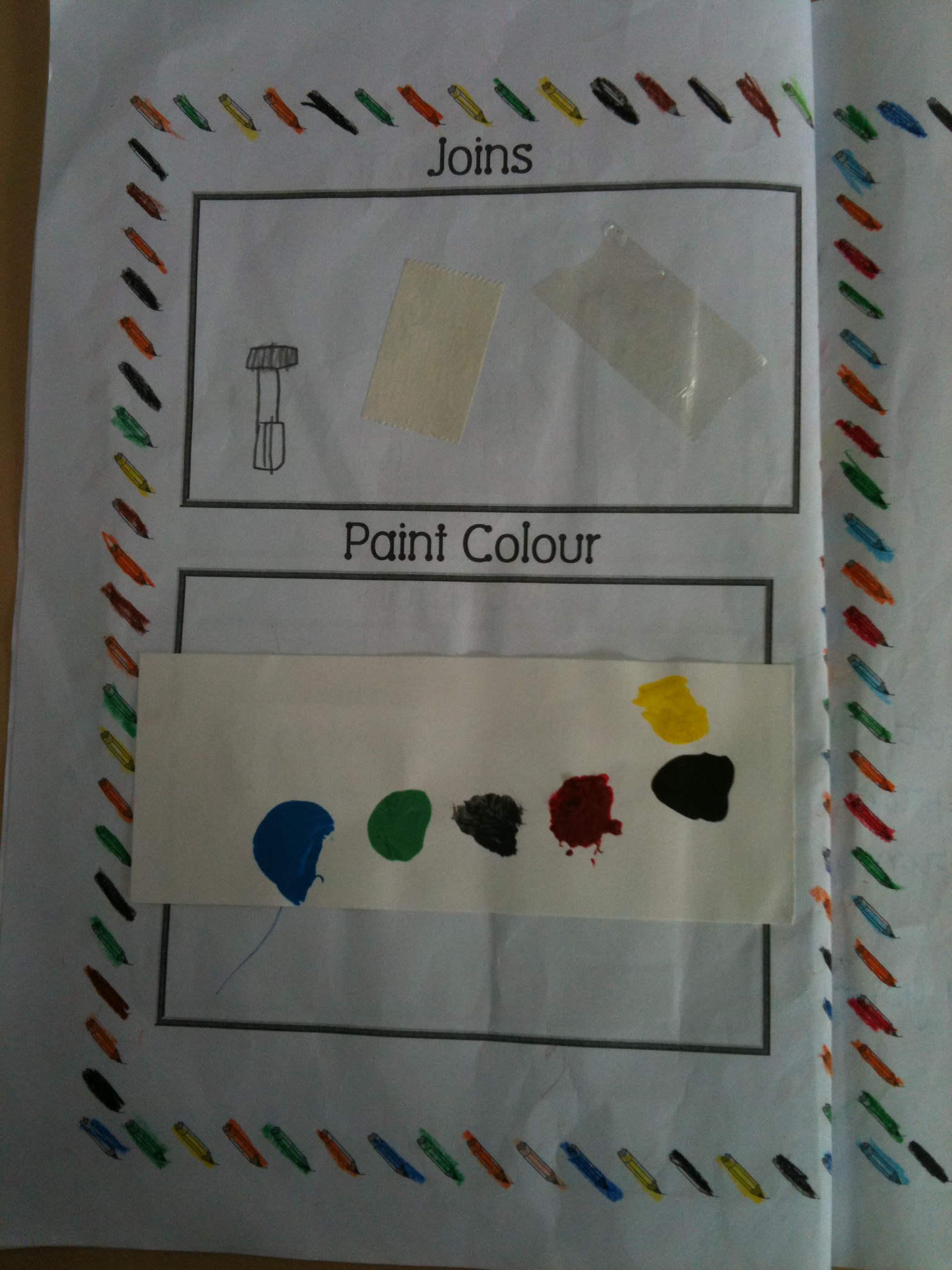
Yesterday, was our Prep Toy Expo. The whole school community really supports our Prep students. The Expo is attended by parents, grandparents, all students and teachers. It’s a wonderful experience for our Preps to explain their toy design and show their toy. There were  80 plus Prep students, their toy and design brief set up in our multi-purpose room. The Expo runs for one hour and is very busy. Great conversations were heard, with older students and parents asking terrific questions about each toy.  I’ve included a couple of pages from a design brief. The other pages have photos on them. Photos of children are not included in this blog. The last page is a student reflection and teacher reflection.

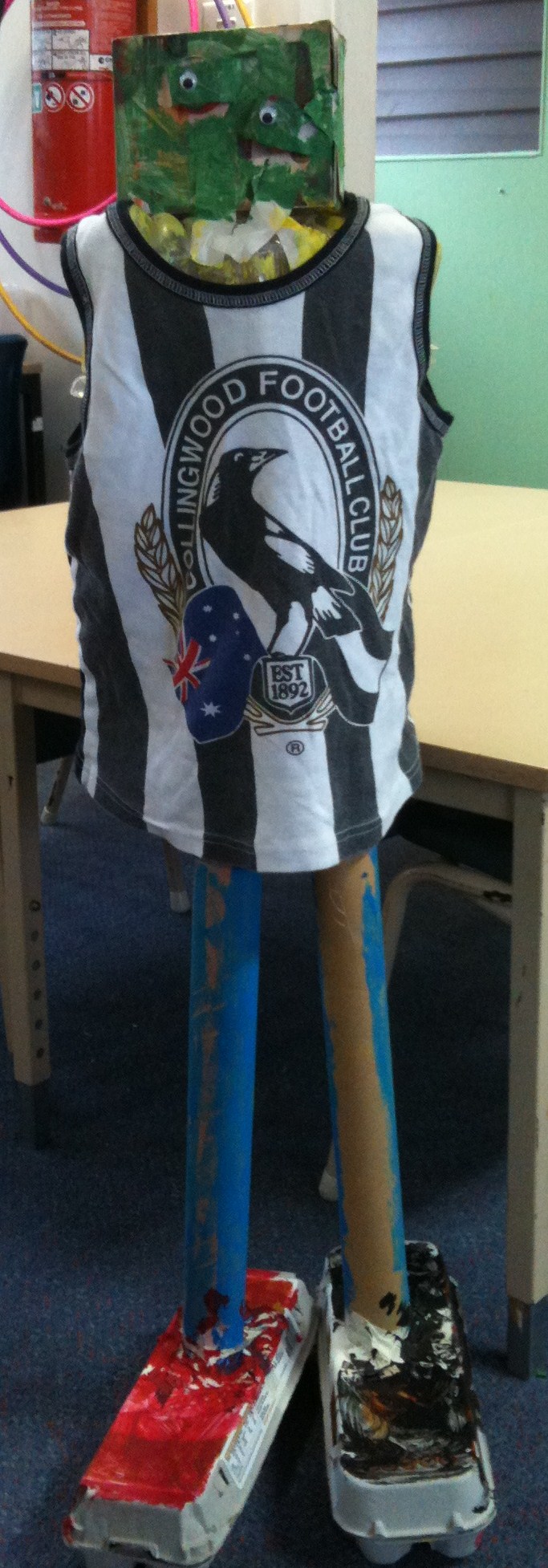
Today was football day. Yesterday, the children took their toy home, but one returned today. This toy is a real character, although I’m sure he could be dressed in better colors.

Cheers Nina

2 Comments

Filed under Uncategorized

Toy Story: Prep Inquiry – Our curriculum is International Baccalaureate (IB) Primary Years Program (PYP). Take a look!

My school has recently completed pre-autorisation for the  (IB).  Our curriculum is developed using the IB-Primary Years Program (PYP) framework. Our present Inquiry is outlined below:

Transdisciplary Theme

How the world works

Central Idea

  • Toys have changed over time due to technology

Lines of Inquiry

  • Toys are made of a variety of materials
  • Technology has changed toys over time

Learner Profile

  • Open Minded

Attitudes

  • Creativity
  • Curiosity

Key Concepts

  • Function
  • Change

The children have been completing their own Toy Design Brief. Using their brief they are making a prototype of their toy. I’ve included pictures to show their work. We’ve had some very industrious sessions. The children have loved making their prototype. Please ignore the Christmas table covers; I use them all year round. So what does a Prep classroom look like in Australia? Take a look!

The foam was wonderful. It actually looked liked it had been snowing by the end of this session. Very Exciting! The children are now preparing their color swatch which will be included in their brief. They’ll be painting and ‘glitzing’ this week in preparation for our TOY EXPO. The whole school community is invited to attend the Toy Expo. Parents and children are asked to donate a gold coin which is donated to the Salvation Army to help provide toys for children in need. These young children understand this. The school community are asked to question the children about their toy… and admire of course. I’ll post some finished toys soon.

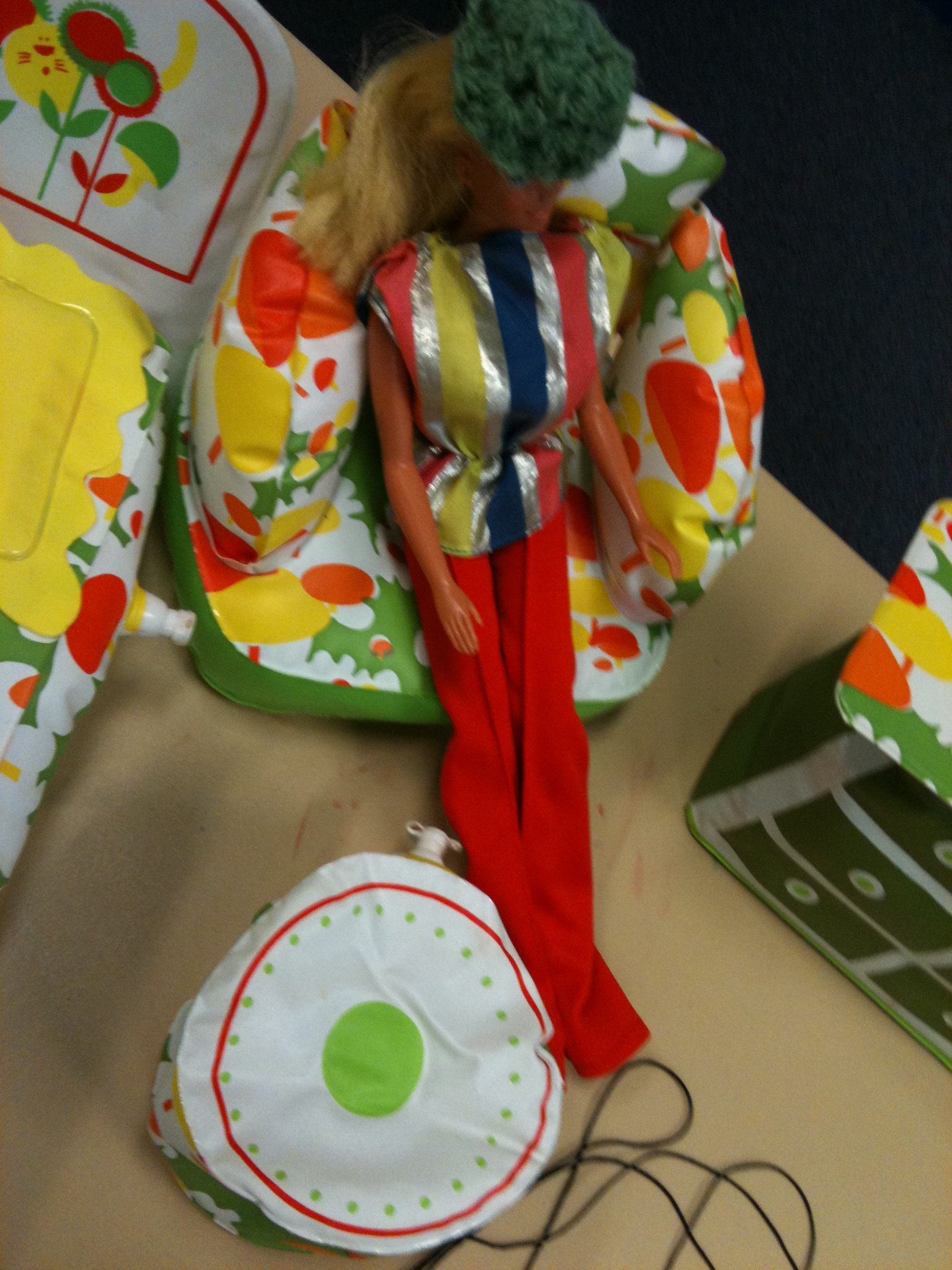
As part of our inquiry, parents and grandparents were invited to share a toy from their childhood at our Toy Talk. It always amazes me how supportive our community is.  Here’s a few pictures of some toys brought in and explained by our visitors. Each toy has a personal history, which links beautifully with one of our previous inquiries.

Only one more week until our Term 3 holidays (2 weeks). The year is flying! For my international readers, in Australia, we have a four term year. Each term is roughly 10/11 weeks. We start in late January/ beginning February and finish mid December for our Summer holidays.

Cheers Nina

5 Comments

Filed under Uncategorized

The International Baccalaureate Primary Years Programme – Unpacking attitudes with Australian 5 & 6 Year Olds.

Unpacking the International Baccalaureate Learner Profile and attitudes with Prep children (5 and some 6 Year Olds) is ongoing. I’ve been using all opportunities within and outside the Programme of Inquiry to unpack the Learner Profile and attitudes in context. Young children need context to ensure meaning.

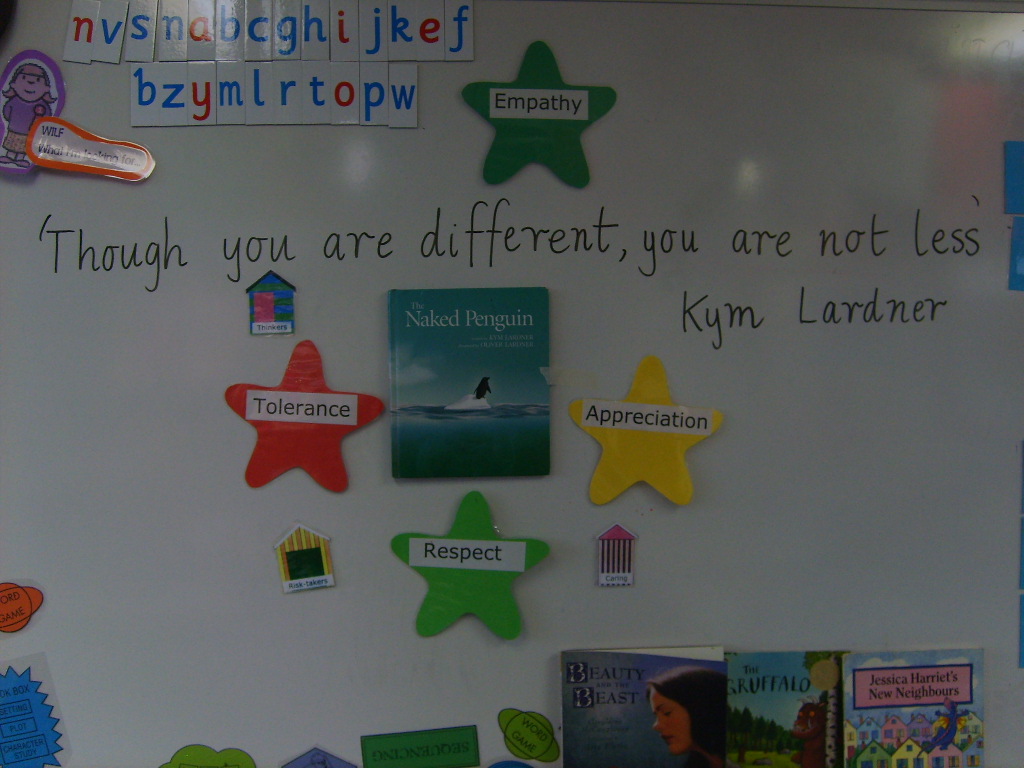
This week we have had Kym Lardner, an Australian author visit our students. I have been introducing Kym’s stories to the children. Kym’s books relate well to the Learner profile and attitudes. Our favourite book is The Naked Penguin. This story is about accepting difference.

Linking the Learner Profile: Risk Takers, Caring, Open-minded, Thinkers
Linking the Attitudes: Respect, Tolerance, Empathy and Appreciation

After reading this story many times, the children and I selected the attitudes related to this story. They could relate these attitudes to the text. I’m impressed! We’ve been talking and living these attitudes for a while. It takes time to unpack these. My Preps are starting the second semester of their first year of formal education. They are young learners, but very capable.

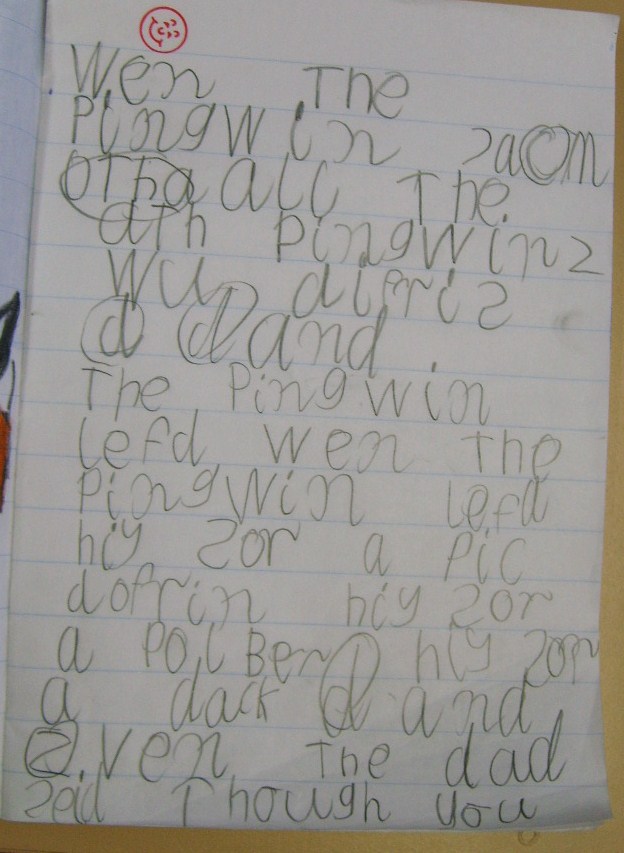
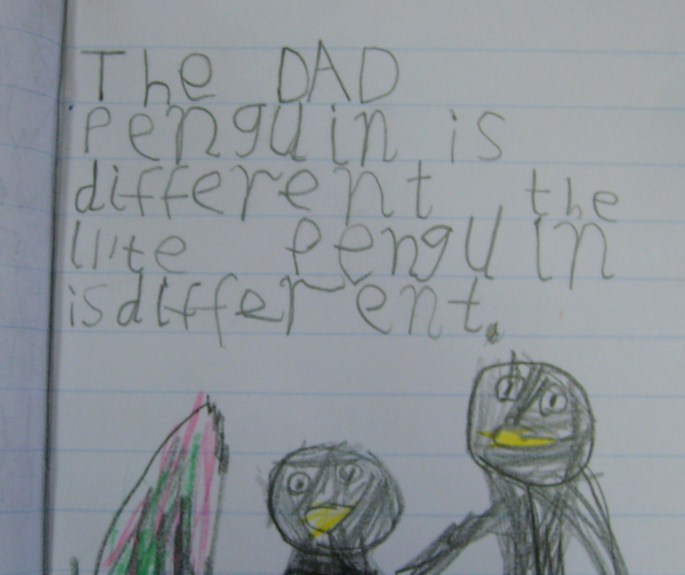
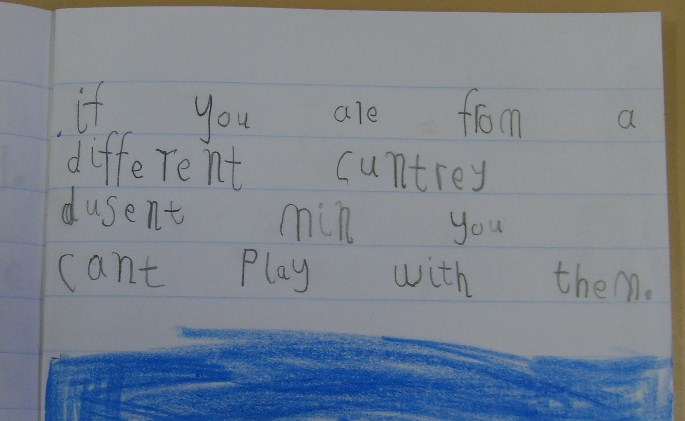
I’ve selected a range of student’s writing in response to a quote from the story.

Quote: ‘Though you are different, you are not less.’

The IB PYP extends children’s thinking, encourages children to ‘go deep’ and I believe leads to improved student learning. Please read the selected responses.

Cheers Nina

6 Comments

Filed under Uncategorized

IB-PYP: Enabling children to develop ‘self management’ skills via ‘Essential Agreements’ develops confident students.

My school is a candidate school for the International Baccalaureate (IB). As part of the IB- PYP (Primary Years Program) we make ‘Essential Agreements’ about all areas of school life pertaining to staff, parents and students. My students have been developing ‘Essential Agreements’ about what they believe is important to them. Given support, these 4 and 5 year olds know what makes them feel confident and happy.

The notion of rules isn’t part of our classroom. These very young children were able to talk, question and develop agreements about how we will support each other in our classroom/school yard to be the best we can be. I think you’ll agree that our ‘Essential Agreements’ are positive and reflect a culture that enables students to develop self management skills.

We will ‘have a go’ at everything or ‘give it a crack’.

We will say well done to people when they do something good or try really hard.

We will always listen to the person who is talking.

We are good friends to everyone. We are a team.

We agree to be at the classroom ready to learn.

Looking out for each other is important to us.

We will always look after our belongings and bodies and pack up our things.

We may add to our agreements during the school year if needed. The children have illustrated an agreement each which are displayed in the classroom and referred to when needed. This week I’ll take photos of children role-playing each agreement for display and reflection. This approach really works!

Cheers Nina

4 Comments

Filed under Uncategorized

International Baccalaureate PYP: Respect – Prep Brainstorming & Mind Mapping: 5 & 6 Year Olds are Switched On!

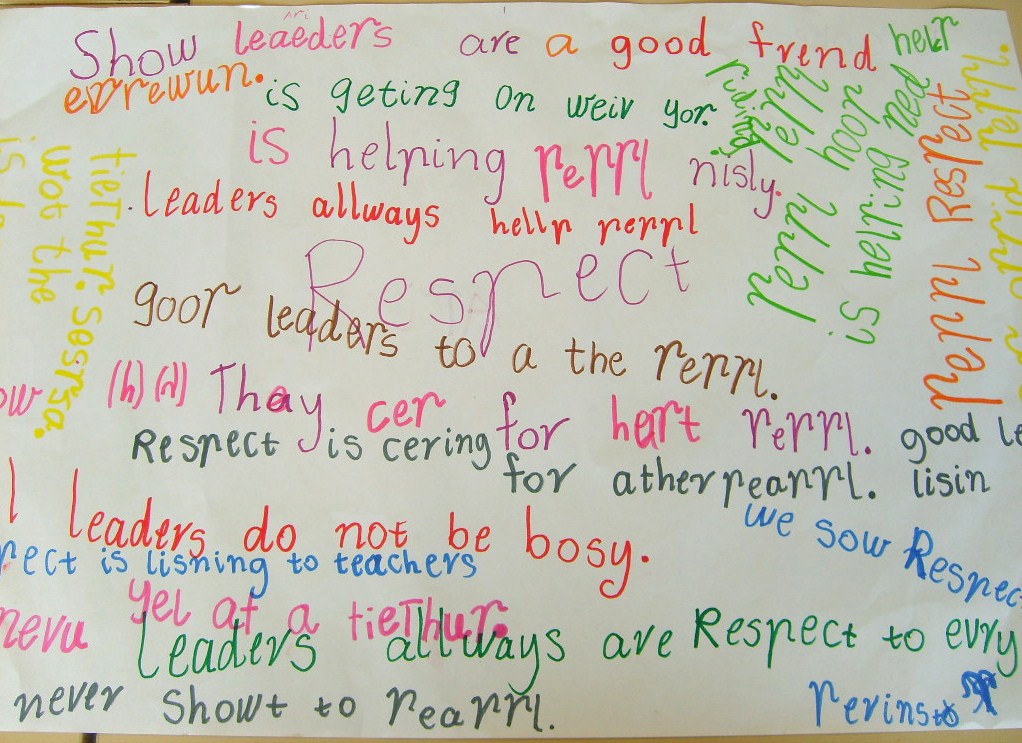
Respect:  What is it? How do we show it? Why do we need it? When do we use it? We have been looking at our school attitudes. One of our attitudes is respect and today we started unpacking what it is and how we show respect in our actions. We’ve talked about respect many times and used the word many times but we haven’t focussed on it specifically. The children worked in small groups to converse, collaborate and record their collective thoughts. Large sheets and textas were provided for the children to record ideas. Large sheets allow young children to have room to stand and work together.

After the groups were given time to brainstorm and record, each group shared their ideas with the class. Ideas were then noted as a class mind map. This helps the children organise their thoughts so they can clearly see how their ideas connect to each other. We then matched our school values to each branch of the map. We’ve been unpacking  the IB values all year and I think their understanding is developing well.

Tomorrow, we will write a whole class essential agreement for respect as it is such an important attitude. I know it’s nearly the end of our school year in Australia but my Preps are  switched on at this time of the year. I wish we had a little more time…

I’ve included some photos of their brainstorming sheets and our class mind map. We are still adding to our mind map.

This is ‘risk taking’ writing. I wanted the children to feel they could write all ideas without fear of errors. This activity was about collaborating and recording collective thoughts. Our mind map is developing well and I love the fact that on the ‘why?’ branch we recorded ‘good Australian’. We’re still developing this branch of our map. Mind maps are excellent for young children because they are very visual. I really enjoy listening to the children discuss their ideas and they way they accept all other ideas.

Cheers Nina

7 Comments

Filed under Uncategorized

Mind Mapping with Preps – 5 & 6 Year Olds and I’m not out of my mind! Well…

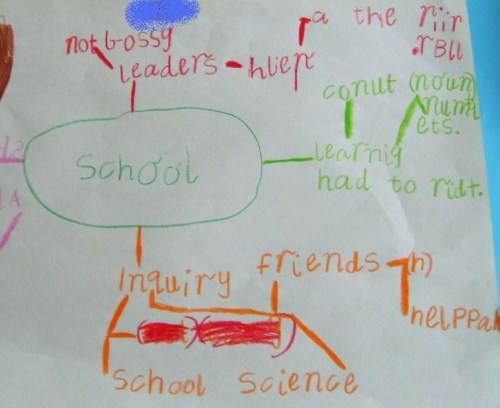
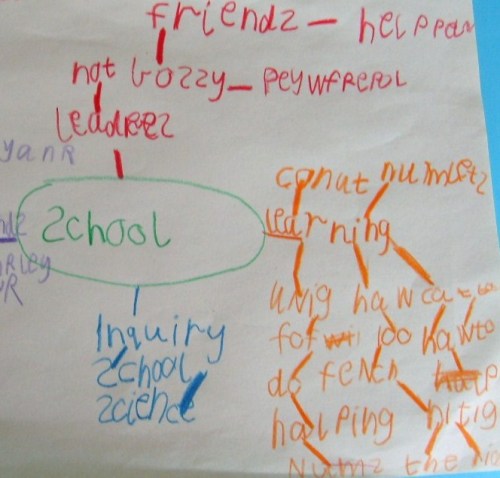
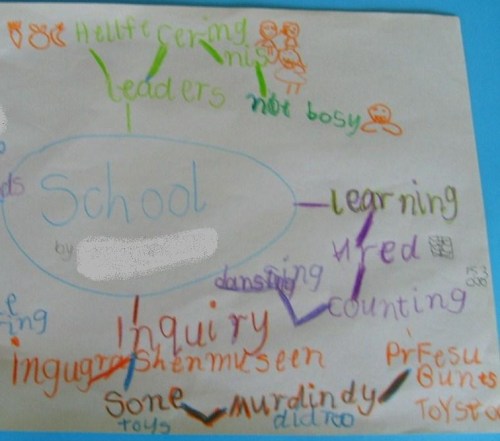
I’ve been looking forward to introducing Mind Mapping to my Preps. They need to know how to build ideas and organise their thinking as much as the  older children. I’ve started with a very familiar topic – school. We brainstormed the branch titles and decided on Friends, Learning, Inquiry and Leaders. As a grade we are always talking about leadership, our learning, being a great friend and our Inquiry. It’s important for Preps to understand the complexities of school and the journey they are making. They love getting out their early work books and comparing them with what they can do now. I love the conversations they have and the sense of satisfaction that is obvious on their faces.

To help organise their thoughts we discussed using colors for each branch. This is our first go at Mind Mapping and I am very pleased with their  attempts. Mind Mapping will be a great tool to use for our inquiry into living and non living things. This is my second year in Prep and they are teaching me so much. The most important thing I have learnt is not to underestimate their capabilities.

I’ve removed the friendship section of these Mind Map as I don’t include my school name,  student names or photos in my blog.

Cheers Nina

S5006588

S5006584

S5006586

S5006590

4 Comments

Filed under Uncategorized

Prep Report: An outline of Term 4 and brief review of Term 3- Where is our teaching and learning heading?

Program of Inquiry

Last term as part of our inquiry ‘Toy Story’, the children designed and made their own toys. To support this we taught the Primary Science Connection’s ‘On the Move’ unit. The children have learnt about how toys move and what makes them move. This was complimented buy two incursions focusing on toys- Sean from the CSIRO and Professor Bunsen.

We also looked at the socio-economic aspect of toys. At the beginning of our Inquiry, Captain A  from the Salvation Army visited the children and spoke about how she helps families and how toys can bring joy into the lives of children who have very little. It was a powerful talk and these very young children understood and showed great empathy.

To celebrate their success and to give our students the opportunity to share their understanding with others, the Preps held their own Toy Expo. Many parents and students came and asked questions or admired their designs and toys. Visitors were requested to bring a gold coin donation with the money collected being given to the Salvation Army. The children raised $ 214 which was fantastic.

Our Toy Drive was equally successful with boxes filled to capacity. On the last assembly for Term 3, the Prep children presented the collected toys and money to Captain A  from the Salvation Army.
Eight Prep students (from across all grades) spoke at assembly. During the term a total of thirteen Prep students presented information at assembly. This is an area the Prep Team is keen to develop. The local newspaper came and photographed the children with Captain A which was wonderful. The Preps have been supporting the Salvation Army for a number of years.

The central idea for our Inquiry this term is ‘Living things have certain requirements in order to grow and stay healthy’. The lines of inquiry which will define the scope of our inquiry into the central idea are:

  • Sorting living and non-living things
  • Characteristics of animals and plants
  • Needs of living things

Our program follows a series of lessons planned using the e5 planning sequence. The e5 program consists of lessons which are designed to Engage, Explore, Explain, Elaborate and Evaluate. The children will be exploring our local beach and school ground in order to discover the answers to the following questions.

What do we already know about living and non-living?

What is living and non-living?

What do living things need in order to survive?

The Dolphin Research Organisation will be conducting a series of lessons. B who worked with our students in 2008 is returning. His lessons will include developing the children’s’ understanding of the needs of living things taken in the classroom, followed by a ‘hands on’ exploration of the rock pools at our beach. Initial base-line data has been collected to enable the children’s understanding to be assessed during and at the end of the Inquiry.

Literacy

This term we will continue to develop our student’s writing by incorporating strategies which scaffold composition i.e. the ability to plan, edit and strategies which enable the children to extend their ideas. Interactive Writing – teacher and student led, Shared Writing, Modelled and Guided writing are being used across the unit. Sharing ideas as a team is valued and wherever possible this is happening.

Reading, comprehension and text analysis is incorporated into our Early Years Program. Our program emphasises the importance of reading for meaning, with all students across the unit being delivered a program which develops the skills necessary for deeper levels of comprehension. The context of what is read is discussed, which then leads to discussion centred upon characters, mood, setting etc… Oral discussion and group activities are used along with individual responses to text. Guided Reading, Modelled Reading, Shared Reading and Read Aloud teaching strategies are incorporated into planning and programs. Student reading development is regularly assessed with teachers working collaboratively to cater for different groups across classrooms when required.

Opportunities to broaden student vocabulary are incorporated into programs. Conversation as a grade and in small groups is intrinsic to all learning situations. Opportunities for children to talk to a wider audience are incorporated when relevant to our classroom program.    

Numeracy

Our numeracy program this term will build upon our students understanding of Chance, Data, Patterns, Sorting –Venn Diagrams, 2D Shapes, Location, Time, Money, Mass, Volume and Capacity. The program will also cover number facts to 10/20 and beyond, doubles and near doubles to 20, addition and subtraction to 20 plus. Open ended activities have been planned to cater for the needs of different students.  The Early Years Numeracy instruction model is implemented in classrooms.

General Discussion

The Prep students are completing the new ‘Online English Interview’ assessment. This appears to be a very worthwhile assessment tool but is also a time consuming assessment program. We are trying to implement this assessment with as little disruption to our teaching program; however, it is inevitable that there will be some minor disruptions if we are to assess each student within the timeline provided.

Once again the Prep Team are looking forward to an exciting ‘jam-packed’ term. Transition will be an important focus as we prepare our students for the Junior Unit in 2010.

The Prep Team

Cheers Nina – I hope you find this interesting.

Leave a comment

Filed under Uncategorized

Preps (5&6 Year Olds) can reflect upon their learning: Toys designed by Preps!

As part of our inquiry ‘Toy Story’, the children have been designing and making their own toys. To support this we have been teaching the Primary Science ‘On the Move’ unit. The children have learnt about how toys move and what makes them move.

To celebrate their success and to give our students the opportunity to share their understanding with others, the Preps held their own Toy Expo this week. Parents and students were invited to question and admire the designs and toys. Visitors were requested to bring a gold coin donation with the money collected being given to the Salvation Army. The children raised $ 214 which is fantastic. When I told my students how much the Preps collected, there were gasps! One child said he’d never seen so much money!

Our Toy Drive has been equally successful with four huge boxes filled to capacity with all sorts of toys. My school is part of a very special and giving community.

Once the children had finished their toy and design brief they were asked to reflect and write about their toy. I also completed a teacher reflection which they were very keen to read. I was very pleased with their reflections. Have a look at the photos below!

S5006513

S5006504

S5006507

S5006496

S5006494

S5006495

S5006493

S5006497

S5006499

S5006500

The children have loved this inquiry and have realised that they can make a difference in the lives of others through Service Learning.

Cheers Nina

Leave a comment

Filed under Uncategorized

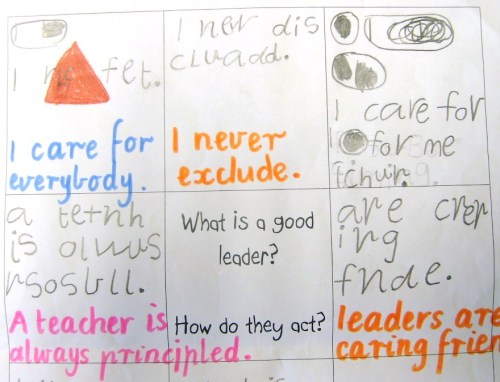
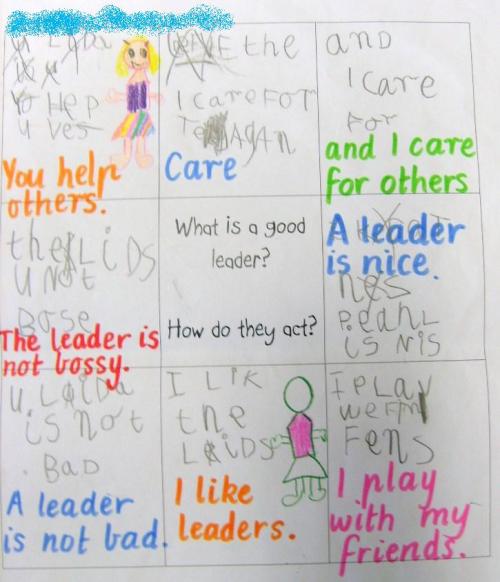
Student Reflections: What does principled really mean? Preps and a Lotus Chart.

The IB aim is to develop ‘internationally minded people who, recognising their common humanity and shared guardianship of the planet help to create a better and more peaceful world.’ Source IBO

The IB Learner Profile – Students strive to be: Inquirers, Knowledgeable, Thinkers, Communicators, Principled, Open-minded, Caring, Risk-takers, Balanced and Reflective.

This post outlines the journey it has taken to get 5&6 year olds to understand what principled means.

The IB states: Principled-‘They act with integrity and honesty, with a strong sense of fairness, justice and respect for the dignity of the individual, groups and communities. They take responsibility for their own actions and the consequences that accompany them.’

Whoa!’ Unpacking this with Prep students (first year of formal schooling in Australia) has been a challenge. Separating the principal of the school and the word principled has been difficult. In the end I decided that I had to work the principal (school) into the unpacking.

Conversation: As a class we have been discussing the questions below for a number of weeks.

What is a school principal?

Prep Answer: The leader of the school.

What is a leader?

What does a good leader do?

A good leader is principled.

What does principled mean?

How does a principled leader act?

And …it worked. After grappling with this concept, I think (hesitantly) that my students are ‘getting it’.

How do I know? Reflection Activities – What do I know?  The children were put into mixed ability groups to talk about and record their thoughts (words & pictures) about the following.

 A good leader is principled.

How do they act?

We used a Lotus Chart tool. The children and I completed a whole grade Lotus and then  students were asked to complete an individual Lotus. They could use words, pictures or sentences to show their understanding. The photos below show, not only their ability to successfully use a lotus chart but their developing understanding.  I scribed after my students completed their reflections.

S5006071

S5006069

S5006074

This is an example of thinker’s writing. It’s not safe like a journal, new words are recorded and true risk-taking is evident. This is a small selection of my grade and I have selected examples across displaying a range of abilities. Hope you enjoy reading their ideas.

S5006063

P.S The beauty of the Lotus is, that any of the filled squares can become the centre of a new lotus and be unpacked again and so on….

Cheers Nina

Leave a comment

Filed under Uncategorized

Literacy – Inquiry Learning – Writing with Purpose.

  I find that to build and accelerate the writing skills of young children and actually students of all ages, opportunities need to be given for students to record purposefully. Journal writing is a favourite of teachers in the Early Years and although important, I don’t believe recounts should be used by themselves for assessing a student’s writing progress.

Children need to write in different styles naturally and with purpose. Journal writing tends to become stilted and doesn’t challenge young writers by the end of their first semester at school. I call it ‘nuts and bolts’ writing.

Inquiry Learning and Language Experience partner each other perfectly, because how can you inquire without being exposed to real experiences? How can vocabulary be built if it’s not linked to real experiences? How can we expect children to write well without building vocabulary? This is why many young children struggle to write – their oral language and experience are limited. It is also why I believe oral language development is critical to becoming literate. It starts from birth.


Language Experience: Real Learning!


“What I can think about, I can talk about.”

“What I can say, I can write.”

“What I can write, I can read.”

“I can read what I can write and what other people can write for me to read.”


Strategy: From day one of Prep I start building vocabulary. I put a word on the board e.g. start and ask the children to come up with words of similar meaning. At the beginning of the year my Preps would come up with one word, possibly two if I was lucky. By the end of the year my students were consistently making lists of ten or more words of similar meaning to my initial word. There has to be a psychological term for this which I can’t name, but it’s related to developing the thinking skills and potential of young minds. It is, however, understanding that young children 4-6 years at the beginning of Prep have brains like sponges and a natural curiosity which needs harnessing. picture-008  


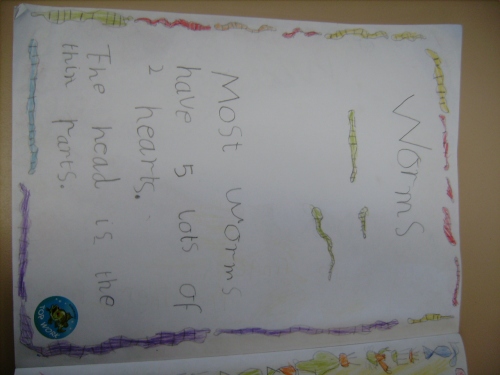
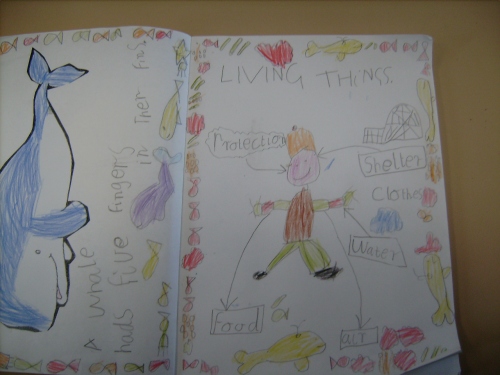
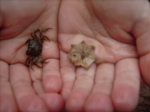
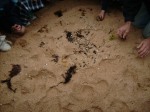
I’ve added some photos of Inquiry writing samples from our Inquiry into Sustaining our environment- What is living and non-living?- Term 4.  As our school has the sea ‘on our doorstep’ it was natural to start with Moondah Beach. Ben (my students called him Ben-Ten) from the Dolphin Research Centre was heavily involved in our Inquiry. Having an expert to lead ‘hands on’ learning experiences was wonderful. picture-036


Why Borders?

The children design a border for each learning reflection as Lane Clark states that children are more inclined to remember information when they use a border. I would also state that I’m not including the best but the average standard in my class and it is the students own reflection and recording of their learning.

 I hope you enjoy this post. I’m still learning how to respond to comments. I actually replied to one person three times. That might sound interesting but it was the same reply from me three times. Ummmmm! Cheers Nina

Real Experiences: sea-visit-054sea-visit-014 

sea-visit-059

Vocabulary: Our Muralsea-visit-2-0091

2 Comments

Filed under Uncategorized