Powerful video & text: How one action prevented a youth suicide – Why the IB- Learner Profile should be lived and breathed by students, teachers and the community!

Probably one of my most important posts! Education & the success of our education systems is far more than ‘As’ on a page… ‘just saying’

nina davis's avatarNina Davis: Teaching & Learning in Australia

A psychiatrist friend shared this video with a message on Facebook…

‘It is something everyone should read – especially school kids.’

I always watch or read anything Angela shares because I know her work. The video is confronting, but so is youth suicide.

The IB -PYP clearly mandates that the Learner Profile is embedded into the curriculum. It is unpacked from the very first day of school.

All schools have values they embrace but I wonder how well the values are embedded across the curriculum. It takes time to unpack the Learner Profile with students in a real and meaningful way. The Learner Profile has to be lived and ‘breathed’ by students. It’s not a wish list, its part of what embodies an IB teacher, student and IB school community.

An IB school also has to meet the standards of the IB to be endorsed as an IB school. There are…

View original post 65 more words

Leave a comment

Filed under Uncategorized

Part 2: Working with Mark (Year 10) ‘to be a better writer’ using Be a Better Writer by Steve Peha – documenting Mark’s learning.

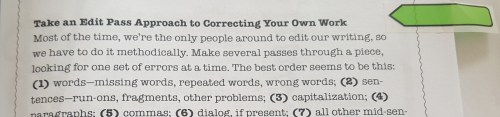
516aatihrgl-_sx348_bo1204203200_Mark and I decided  we would complete the activity  Take an Edit Pass Approach to Correcting Your Own Work following Steve’s steps.

N.B. These sessions are targeted to Mark’s instructional needs and are directly related to his writing samples.

Working with Mark session 2 016.jpg

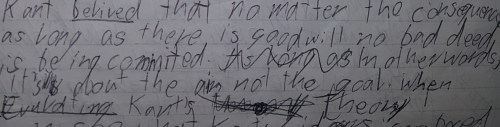
Task 1: Mark wrote an introductory paragraph for a book he had read. He chose To Kill a Mockingbird by Harper Lee. This is his first draft (below) and although he’s still scribbling through his edits, overall, there are notable improvements evident when comparing this sample to his first reference piece in Post 1.

Mark’s first draft followed by his edited draft after completing Steve’s Take an Edit Pass Approach activity. Our conversations were interesting as he completed each step. Mark was constantly referring to prior learning and making connections.

mark-2-050-2

Task 2: Mark completed the following passes…

1. Checked his writing for missing words/repeated words

2. Checked his sentences to see if they made sense.

3. Checked his use of capital letters

4. Checked to see if he had used commas correctly

5. Dialog-none in paragraph

6. Checked for mid-sentence punctuation marks

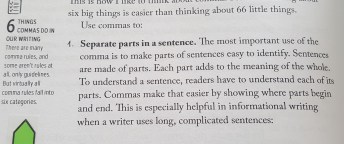
Each time Mark completed an edit pass we referred to Steve’s book to correct  misconceptions. For example, we read the 6 Things Commas Do In Our Writing looking closely at the examples given. Our discussions, and review of commas and their use clarified Mark’s misconceptions.

N.B. Its important to remember that Steve’s book is written for teachers and students. The way explanations are presented is engaging, informative and can be easily implemented!

BIG TICK!

Mark and I unpacked-The 6 Things Commas Do In Our Writing working-with-mark-session-2-023

  1. Separate parts of sentences
  2. Separate items in a list
  3. Separate multiple modifiers
  4. Separate things that might be confusing
  5. Separate speaking from speakers
  6. Separate information to make it easier to read

Mark followed Steve’s recommendation and completed  2 passes for spelling

  1. Underline misspelled words
  2. Correct misspelled words

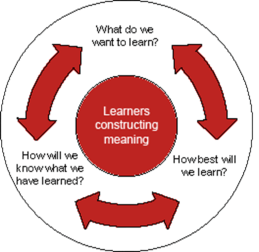
How best will we/I learn?

Mark likes rules, so we are revisiting common spelling rules and using these rules to make corrections. The rules Mark is revisiting, are directly related to the errors made within his texts.

IMPORTANT!

Two Rules Reviewed

i before e except after a long c but not when c is a “sh” sound and not when sounded like ‘a’ as in neighbour

When the word ends in a vowel + y just add ‘s’. If the word has a consonant before the ‘y’: take off the ‘y’ and add ‘ies’

After completing the above, Mark wrote a second draft of his paragraph (see below).

Mark 2 060 (2).jpg

Learner CycleI asked Mark to reflect on his learning, and reflecting is something we’ll explore further.

A reflection book is a great asset for learners to record new understandings and refer to when needed.

After reflecting, I asked Mark what he felt he needed to learn next and record this on a yellow sticky note.

What do we/I want to learn?

Using the Kunyung Primary Learner Cycle questions promotes Learner Agency.

On the yellow sticky note in the picture (above) Mark has clearly stated ‘Punctuate Dialog’… So that’s what Mark and I will be doing!

How will we know what we/I have learned?

  1. Evidence of learning – Mark’s writing
  2. Continuum: Based on Year 10 Australian Curriculum (being developed)

Cheers Nina


Leave a comment

Filed under Uncategorized

When you know you’ve met an inspirational education leader! Vale Dr. Elizabeth Mellor

What is leadership? This post is being read often!

nina davis's avatarNina Davis: Teaching & Learning in Australia

Last week Australia lost a true advocate for early childhood education. Doctor Elizabeth Mellor was a passionate driver for improved early learning for children and much of her recent work was in this area.

Having completed many professional development courses, there is still one standout for me: The Leadership for Community Engagement Program. Elizabeth was a co-presenter and one of those educators you meet and sense instantly that you are in the presence of a leader!

What did I learn from Elizabeth and the course about leadership?

I’m calling it YOU!

You, as a leader, will be different to a manager, you will be finding solutions, you will use your courage and confidence to influence others, you will speak a common language and find that common language so you can move forward. You will empower others and be an enabler so you can shift barriers. You will encourage others to…

View original post 191 more words

Leave a comment

Filed under Uncategorized

Working with Mark (Year 10) to ‘be a better writer’ using Be a Better Writer by Steve Peha – documenting Mark’s learning.

Mark is in Year 10 in Victoria, Australia. I’m working with him to ‘be a better writer’. I’ve asked Mark if he’s happy for me to share his journey here and he is! We’re using Steve Peha’s book to guide us. Mark is an extremely bright, articulate young man.

Documenting Mark’s learning: Initial sample and observations

I asked Mark to write something he had to do for school and I discovered Mark is left handed. He suffers hand cramps and doesn’t have keyboard skills either. However, Mark is very computer literate, but had chosen to use his iPad or phone for everything. His subject content knowledge is high and he knew what the question was asking, but he has to be able to record his thoughts in an essay.

mark-2

Above is Mark’s starting piece and my reference sample.

516aatihrgl-_sx348_bo1204203200_Where to start: The Basics

I immediately asked Mark to change his posture and I checked his pen grip. I also asked him to write on every second line from now on and not scribble through changes. Dotting every second line gave the visual cue he needed. Mark’s incredibly receptive to advice. Just these few simple changes would enable Mark and his teacher to read back his writing and for Mark to correct his spelling and grammar whilst writing.

What do we/I want/need to learn? Kunyung P.S Learning Cycle

learner-cycle

After observing Mark write and talking with Mark, he decided that punctuation is where we need to start first. Mark is invested!

The pen must be always in the hand of the writer. The writing belongs to the student! The student needs to be able to articulate their understanding of each question in the learning cycle

Below: After focusing on two punctuation and spelling rules you can already see a difference in the quality of Mark’s writing.

Nina phone 773.jpg

Whilst reading Steve’s book, I’ve tabbed certain reference points for myself. Unpacking Chapter 8: Better Punctuation has been interesting for me as a teacher.

Each chapter starts with ‘the stuff that matters most!, 10 things you need to know.’  This is followed by background information about rules and the bsteve-page-272-2est ways to learn about punctuation rules.

The beauty of this book is that its not written just for teachers, its written for students too.

Next is ‘Your Checklist for Better Punctuation.’ Steve explains the key things that effective punctuation involves using. He uses the phrase ‘Ask yourself’ after questions, which is an invitation to inquire.

On the side of the page are tips, each with an icon. These are terrific!

magnify-2Light bulb: Think About This

Clip board: Three Great Things To Do OR Learn

Question Mark: Ask Yourself

A Key: Key Ideas

Magnifying Glass: Look Closely

Steve explains that the checklist doesn’t cover everything, but it covers the ‘most important five groups of punctuation’.

1. End of sentence punctuation

2. Mid-sentence punctuation

3. Capitalization

4. Paragraphing

5. Dialog

The chapter includes examples, explanations, tips and tasks for :

Punctuation Changes Almost Everything

Punctuation Reading

Punctuation Inquiry

When Sentences Go Wrong

The Muddle in the Middle

Example: The Muddle in the middle: I love the way Steve explains the Cantankerous Comma, the Dashing Dash, Polite or Impolite Parentheses, the Commanding Colon, the Superfluous Semicolon and the Ethereal Ellipsis.

What will Mark be focussing on this week?

At the end of each chapter there are activities to complete and Mark and I will be doing these. One activity we’ll do this week is: Take an Edit Pass Approach to Correcting Your Own Work following Steve’s steps. I’ll write about this in my next post!

Cheers Nina

1 Comment

Filed under Uncategorized

Powerful video & text: How one action prevented a youth suicide – Why the IB- Learner Profile should be lived and breathed by students, teachers and the community!

A psychiatrist friend shared this video with a message on Facebook…

‘It is something everyone should read – especially school kids.’

I always watch or read anything Angela shares because I know her work. The video is confronting, but so is youth suicide.

The IB -PYP clearly mandates that the Learner Profile is embedded into the curriculum. It is unpacked from the very first day of school.

All schools have values they embrace but I wonder how well the values are embedded across the curriculum. It takes time to unpack the Learner Profile with students in a real and meaningful way. The Learner Profile has to be lived and ‘breathed’ by students. It’s not a wish list, its part of what embodies an IB teacher, student and IB school community.

An IB school also has to meet the standards of the IB to be endorsed as an IB school. There are many checks and balances!

Learner profile.jpg

2015 FebMarchand ANZAC 086

This is an example of how I unpacked the Learner Profile in my classroom over a year. When a student really understands and lives the Learner Profile, they understand the impact of their ‘footstep’.

never

‘Never underestimate the power of your actions. With one small gesture you can change a person’s life.

Thank you for sharing this video and text Angela!

Cheers Nina

1 Comment

Filed under Uncategorized

Practical PD for teachers leads to instructional change: Sue, her writing, her story, her future!

Professional development comes in many forms. Some of the best PD is practical and that’s what I’ve been doing this week. I’ve been teaching my friend Sue, just like I was taught by Jenny Luca the following: 516aatihrgl-_sx348_bo1204203200_

  • How to start a blog
  • How to manage your dashboard
  • How to create and use a Twitter account
  • How to create and manage an Instagram page
  • Start a new Facebook page
  • Linking your blog to these ‘social’ pages
  • How to own your site

Sue is an outstanding teacher and passionate writer and everything she is learning is transferable to the classroom. Her blog is now receiving actual reviews from readers and Bendy and Tash can be googled!!!

Ali, a teacher colleague responded: I’m loving it!! These are great!! I always said to Sue she should write a book!!

capture-3

As a gift, I gave Sue her own copy of Be a Better Writer by Steve Peha. Sue, equally has been using Steve’s work for many years and now has his book. And yes, she has been referring to it while writing her spoof crime fiction. sue-steve-pehaFor example, we discussed capitalization and had a few things we weren’t totally sure about, so we opened Steve’s book Be a Better Writer and read up on capitalization.

‘Chapter 8. Better Punctuation.

The Importance of capitalization. Capitalization has a confusing history. So let’s agree not to confuse ourselves as we look at the one capitalization rule upon which all others are based and take a practical approach to common problems.’ Steve Peha

Steve’s book is written for teachers… and writer’s aged 10 to 16 years but we think it should say any age.

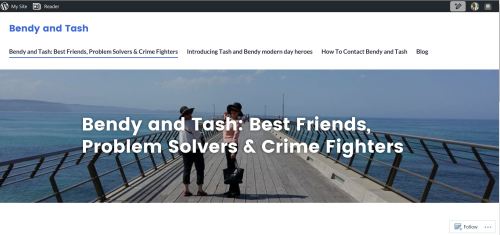
Bendy and Tash: Best Friends, Problem Solvers & Crime Fighters is now bendyandtash.com

capture-2

Sue is not really a ‘newbie’ writer because she has been teaching writing for years and writing herself. However, now she is a published writer! As I said in my last post, sometimes you have to get to a certain age or level of confidence to share your writing with others. The more you write the better writer you become.

If you need a laugh in your day read some of Bendy and Tash’s adventures. There is a co-author who contributes too. Sally from Tassie, Australia!

NB: My son, a 22 year old uni journalist student read Bendy and Tash too. His passing remarks to Sue were, ‘Well, I know your target audience’. But, let it be said, he was laughing while he was reading! 🙂

Cheers Nina

Leave a comment

Filed under Uncategorized

At what age do people discover they are a writer? My friend Sue is now a published writer…well on wordpress. Introducing: Bendy and Tash- Best friends, problem solvers & crime fighters! LOL :) Links here…

My close friend and teacher colleague has always loved writing. She’s written her school’s end of year play for many years, but like many writer’s hasn’t shared her other writing in broader forums.

Well this has changed! Sue laughingly now calls herself a published writer and she is. Yes, she has finally decided to be a risk taker, or you just get to that age where you do things for yourself and are not so concerned about what others’ think. A good place for a writer to be! 🙂

Sue has been writing about two characters Bendy and Tash. It’s a crime fighting spoof. The characters are based on Sue and her friend Sally. Yes, can’t say more than that.

Absolutely hilarious, with that Aussie sense of humour resonating through her words.

If you would like a laugh, then follow the link. No, we can’t google Tash and Bendy, but I’ve got a feeling we will soon. Link below:

Bendy and Tash: Best Friends, Problem Solvers & Crime Fighters

bendy-and-tash-photo

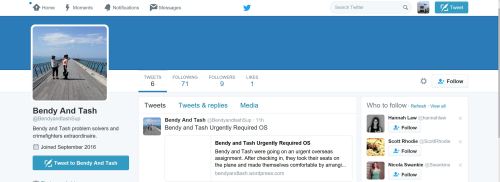
Bendy and Tash are on twitter, or you can contact them at bendyandtash@gmail.com.

bt-twitter

Cheers Nina


Leave a comment

Filed under Uncategorized

The teaching text we/I need! Just imagine…

learner-profile-open-minded-015

To the many teachers who contact me about the work of Angela Stockman and Steve Peha.

Just imagine having at your fingertips a writing text or texts which take you from curriculum design to implementation to assessment and where instruction is guided from student work… and written for the Australian Curriculum and other curriculums. That would be something because I know there’s a gap. Yes, there is some excellent material out there but it’s difficult to implement. Imagine…. if the text and extras were cloud based as well. I can!!

Just maybe, and I mean maybe, this could happen and I’ll keep all posted here! Fingers crossed!

Cheers Nina

1 Comment

Filed under Uncategorized

Student Agency Part 3: The Teacher

Student/Learner Agency is essential if we are preparing our learners for their future. Student/Learner Agency starts from a child’s first year of school for the teacher. In previous posts I’ve talked about the student and the task and now I’ve added the teacher. All three components are crucial to Student/Learner Agency. Student-Teacher-Task

The Role of the Teacher

Plans collaboratively for student needs based on a sound knowledge of curriculum and students.

Refers to the 5 essential IB elements – Knowledge, Concepts, Skills, Attitudes and Action.

Provides tools and strategies for students to be aware of, and monitor, their own learning e.g. pre-Assessments, continuums, rubrics, exemplars, etc.

Supports students to use evidence when personalising and revising their learning goals.

Clarify students’ misconceptions, in order to refine individual learning goals.

Discusses connections between learning goals, learning activities and assessment requirements.

Help students make sense of connections within and between curriculum areas.

Supports students to identify ‘stretch’ goals and set goals to achieve them.

Plans collaboratively to meet student needs based on a sound knowledge of exemplary teaching practice.

Develops students’ metacognitive skills by modelling the language of thinking, and providing tools and strategies to assist them to be aware of, and monitor, their own learning.

Monitors students for cues and notices when students need assistance.

Makes students responsible for establishing deliberate practice routines.

Provides students with a choice of learning activities that apply discipline- specific knowledge and skills including literacy and numeracy skills.

Facilitates processes for students to select activities based on agreed learning goals.

Supports student to select learning engagements that support their areas of strength and areas for development.

Ensure dialogue is distributed, so that teacher and students both take an active role.

Raises students’ awareness of the characteristics of inquiry and the process of inquiry.

Involves students in adapting the learning space to support everyone’s learning.

Shares responsibility with students for reinforcing agreed learning expectations and refers to agreed routines and protocols throughout the lesson.

Paces the lesson, giving students enough time to intellectually engage with the concepts, reflect upon their learning and consolidate their understanding.

Demonstrates respect for all students’ ideas and ways of thinking.

Negotiates group arrangements with students, appropriate to particular learning goals.

Designs activities that incorporate cross-curricular applications and real world connections.

Present concepts of the discipline in multiple ways to all students and identify diverse perspectives when presenting content.

Supports students to hold each other to account for their contributions to the group’s outcomes.

Facilitate students’ self-assessment by giving them tools to assess, and reflect on, their own work.

When articulating assessment requirements, the teacher uses examples of student work to demonstrate the expected standards.

Organises opportunities for students to articulate what they have learnt and to say which learning strategies are most effective for them.

Explain the taxonomy used to structure the learning activity and to inform the assessment criteria, so that students understand the intellectual demands of the task.

Provides students with opportunity to reflect critically on the strategies they have used to complete the learning task.

Negotiate assessment strategies with students, ensuring these are aligned with learning goals.

Supports students to assess their own use of academic language and measure their own progress in this area.

Support students to critique one another’s ideas, in order to increase the intellectual rigour of the conversation.

Uses a variety of formative assessment activities to help students assess their own progress.

Provides opportunities for immediate feedback. Kunyung PS

Cheers Nina

2 Comments

Filed under Uncategorized

Student Agency Part 2: The Task!

In the previous post I wrote about the behaviours of a learner developing Student Agency. In this post I’m describing the elements of tasks which empower Student Agency.

12439093_10153689901384132_8793394185808958194_n

Supports students to identify their learning goals

Encourages self-responsibility.

Allows students to be immersed in the possibilities open to them.

Provokes thinking beyond the known, opening up further possibilities.

Makes connections to appropriate tools e.g. pre-tests, continuums, rubrics, exemplars, reflection, etc.

Incorporates a variety of transdisciplinary skills.

Incorporates cross-curricular applications and real world connections.

Makes connections to previous learning, reflections and evidence.

Designed to allow students to achieve their learning goals.

Allows for connections between learning goals, learning activities and assessment requirements.

Provides a range of options for students e.g. teacher focus group, peer tutoring, hands-on, thinking routines, etc.

Develops students’ metacognitive skills, providing tools and strategies to assist them to be aware of, and monitor, their own learning.

Makes students responsible for establishing deliberate practice routines.

Provides students with a choice of learning activities that apply discipline- specific knowledge and skills including literacy and numeracy skills.

Allows for students to select activities based on agreed learning goals.

Allows for the use of the characteristics of inquiry and the process of inquiry.

Allows for students to intellectually engage with the concepts, reflect upon their learning and consolidate their understanding.

Allows for group arrangements, appropriate to particular learning goals.

Incorporate cross-curricular applications and real world connections.

Supports students to hold each other to account for their contributions to the group’s outcomes.

Supports students to generate their own questions that lead to further inquiry.

Supports students to use different representations to develop their understanding of particular concepts and ideas.

Incorporate cross-curricular applications and real world connections.

Includes multiple entry points.

Supports the development of academic vocabulary through oral and written construction.

Involves the community – parents, peers, other classrooms.

Various assessment tasks and tools for students to select from to assess and reflect on their own work.

Allows for a variety of thinking routines.

Promotes the use of evidence and assessment criteria to support assessment outcomes.

Provides opportunities for students to articulate what they have learnt and to say which learning strategies are most effective for them.

Allows for the critique of one another’s ideas, in order to increase the intellectual rigour of the conversation.

Builds in a variety of assessment, reflection and feedback systems (teacher, self, peer). Kunyung PS

Quality planning, accurate assessment, point of need learning goals and rich tasks are required to develop Student Agency. Part 3 will outline the role of the teacher.

Cheers Nina

1 Comment

Filed under Uncategorized