Category Archives: Uncategorized

Independent Writing: Week 13 of Formal Education for my 5 & 6 Year Olds. Writing on lines is actually helping!

This week I gave my students their first lined book. They’ve only been at school for a total of eleven weeks so it’s early. We usually use dotted thirds in my area of Australia, but this year I decided to give my students plain lines before dotted thirds and earlier in the year. Some teachers might question these very young children using lines at all, but as a number of students are writing more than one sentence they actually need a line to encourage them to not confuse one sentence with another. I was wondering how they would handle lines but they loved it. Very grown up… and if they don’t sit their letters on the line it really doesn’t matter. They will eventually.

What will the children understand, know and be able to do?  WALT – We are learning to… Short, sharp and focussed

  • Write a simple text – personally significant
  • Write for their own purpose & share
  • Use their understanding of the alphabet and its sound system when writing
  • Use conventional letters ( transfer of taught letters)
  • Use some simple punctuation i.e. full stop, and capital letters with understanding
  • Begin to talk about how writing is used to share or note ideas, feelings and information
  • Understand the purpose of their writing
  • Form letters correctly – transfer of taught letter and letter families  
  • write a simple Recount / Information text

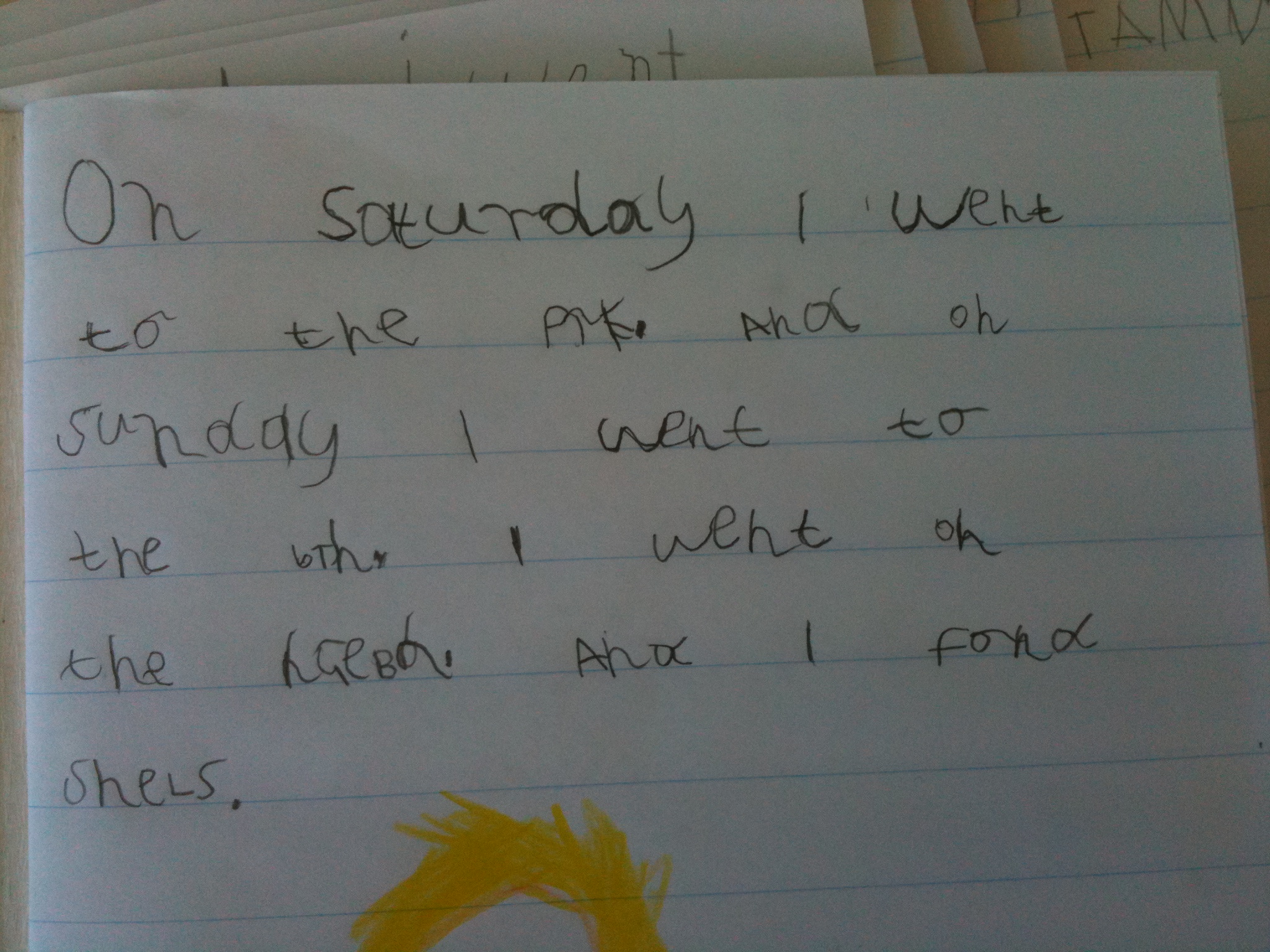
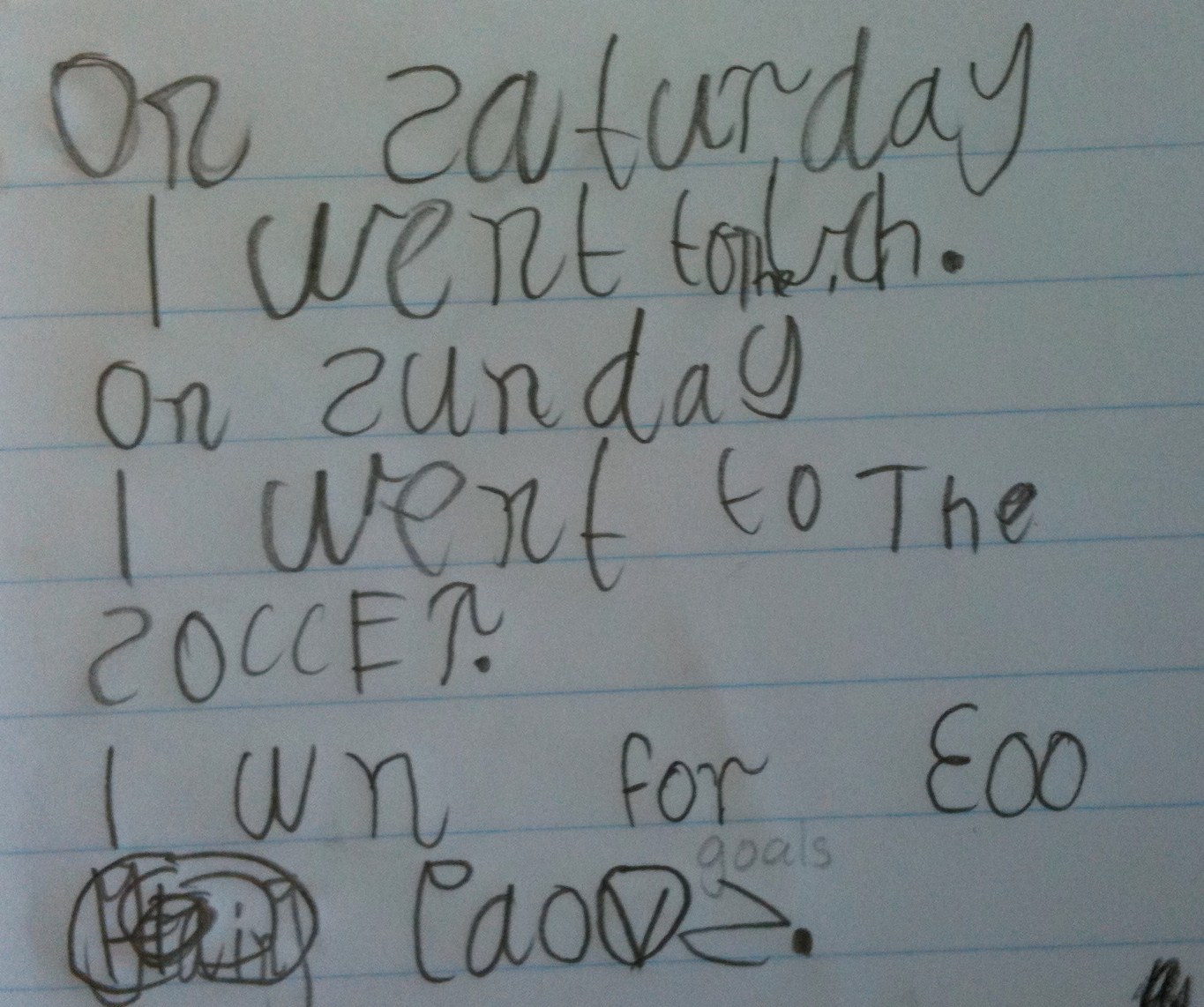
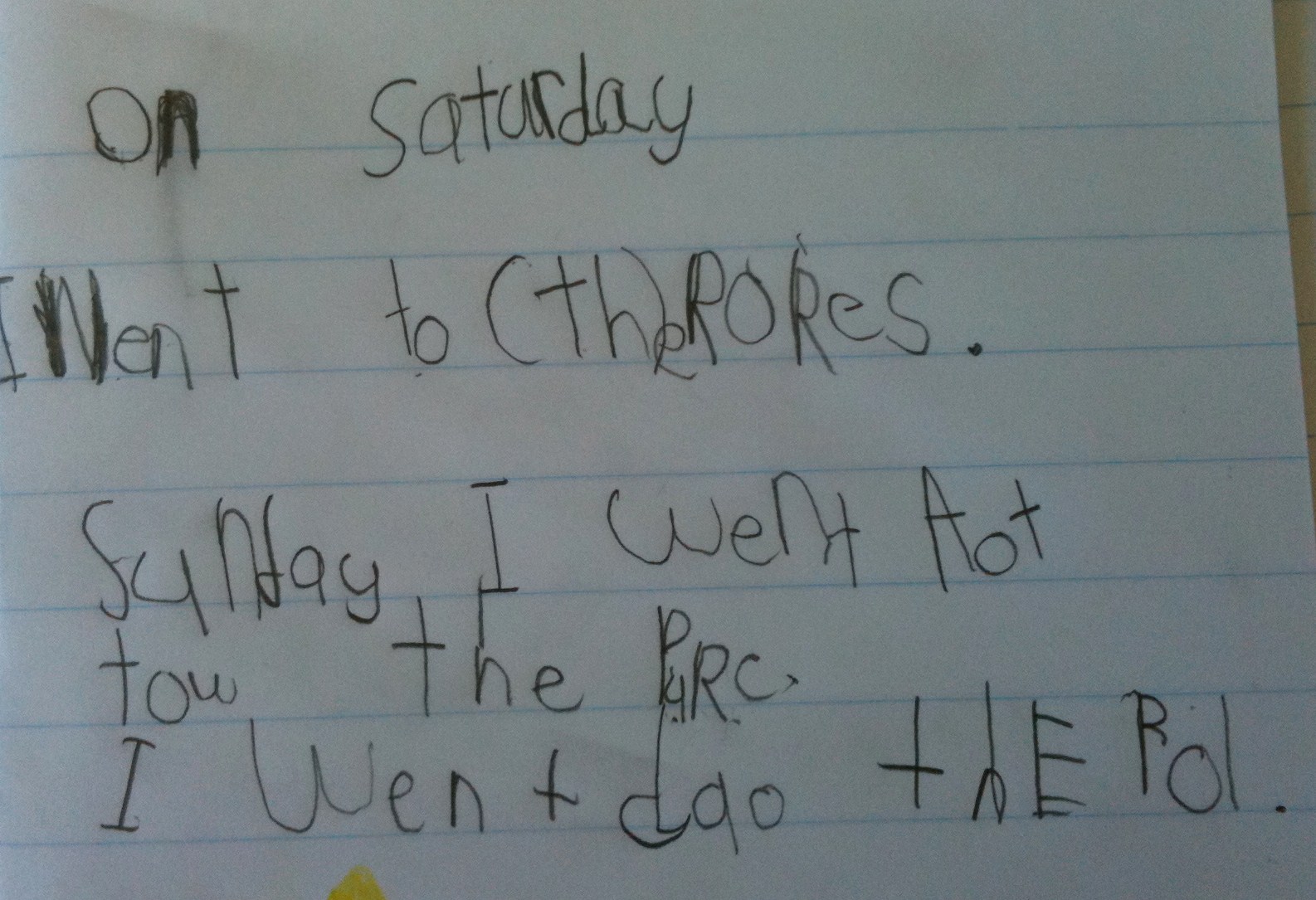
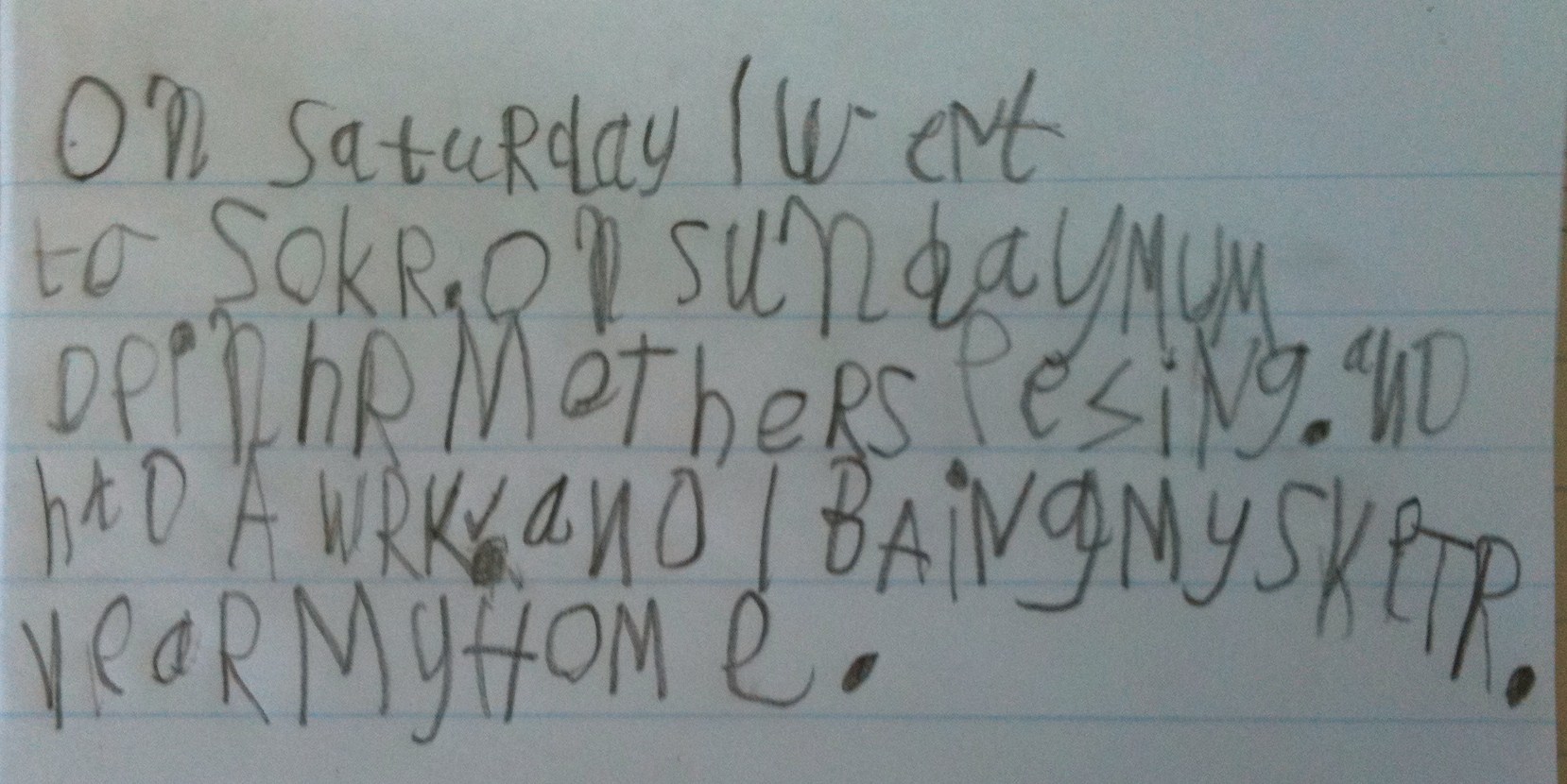
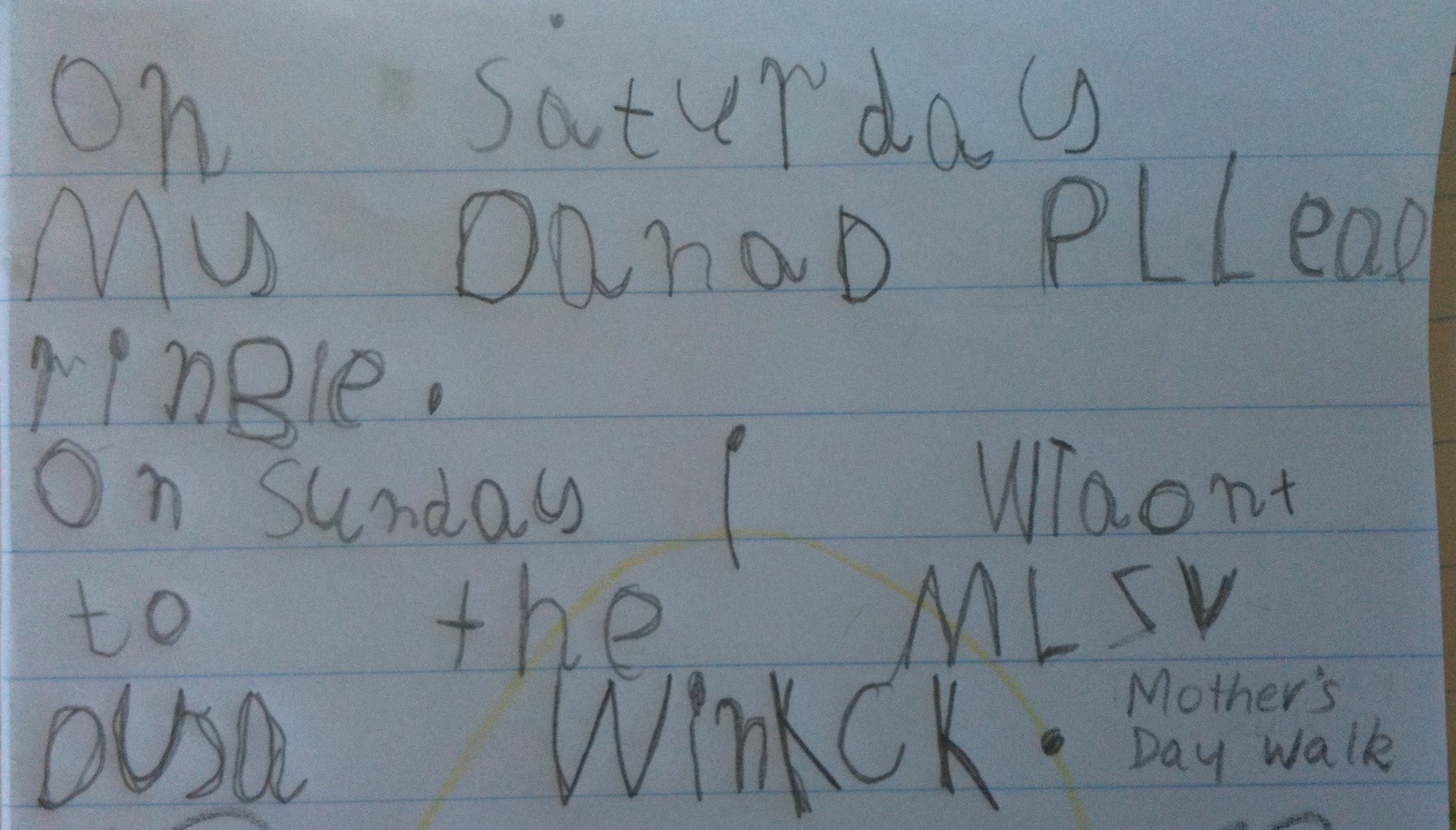
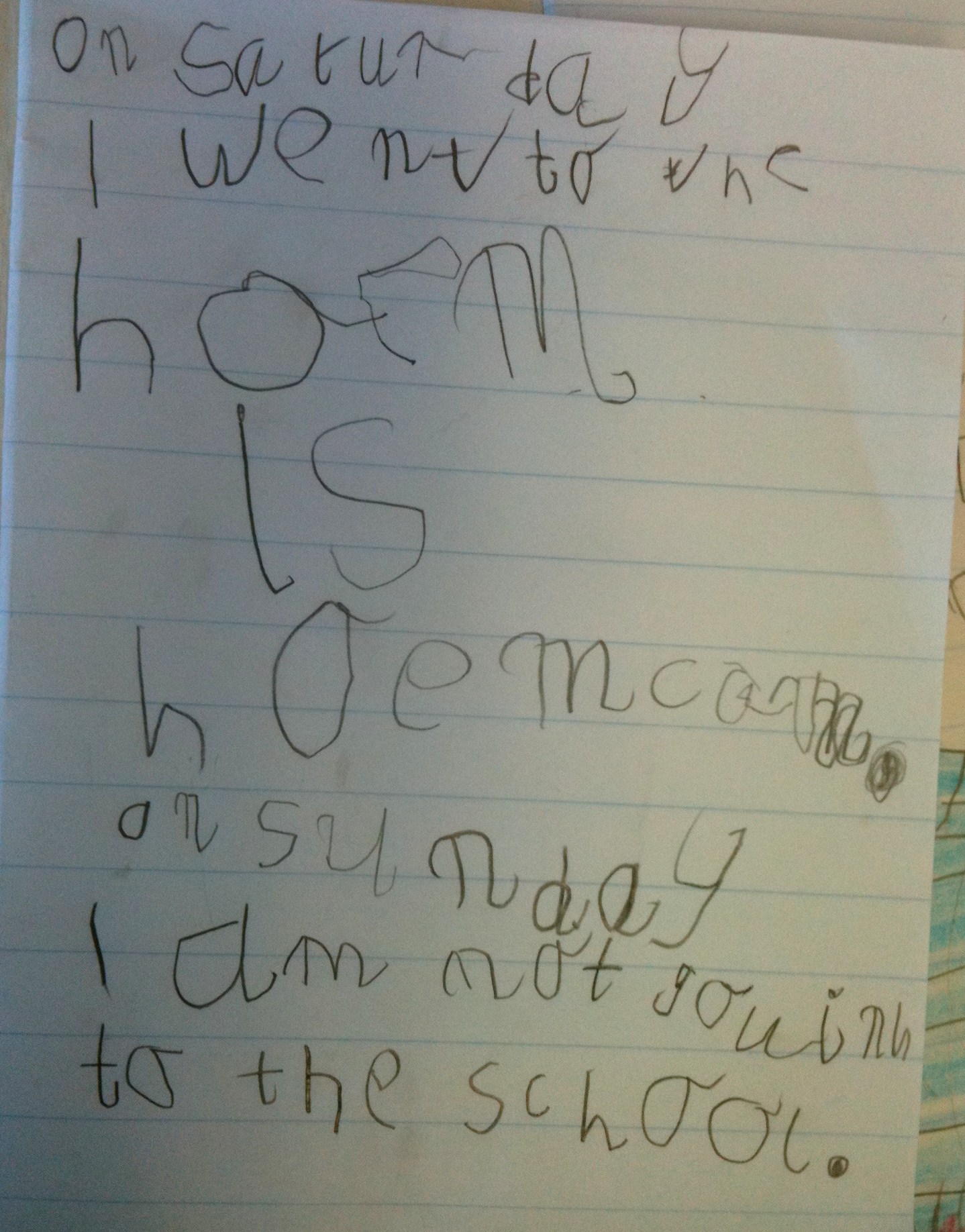
Independent Journal Writing Samples – a range is shown here.
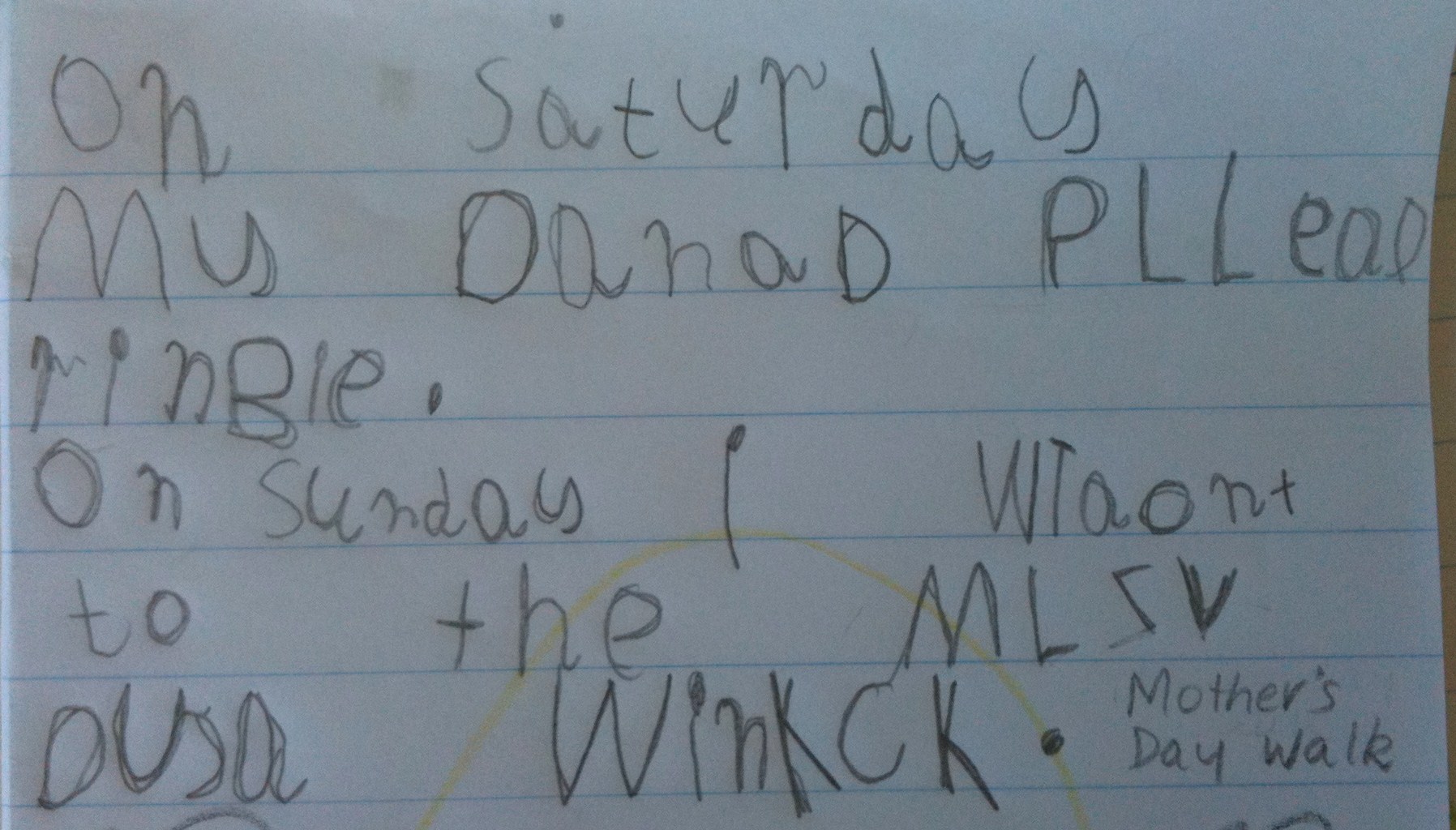
The children were introduced to their first sequencing scaffold i.e. On Saturday…On Sunday… This is helping to extend their writing. My students are all travelling their own journey but all are moving forward and I can see the transfer of teaching and learning into their writing. I’m revisiting the Early Years Literacy strategies and would say to everyone keep revisiting – Modelled Writing, Shared Writing, Interactive Writing, Guided Writing & Independent Writing.

Cheers Nina
Leave a comment

Filed under Uncategorized

ATLAS – Looking at Student Work

Once again my thanks go to Mark Walker, who has been a great knowledge provider in the Instructional Rounds learning community. Mark has pointed my TPL colleague Jenni and me in the direction of another great resource. I believe when ATLAS is completed as a pre round activity or as a team / unit activity at school enhanced questioning and observation of student work will result. It also would help answer the direct, where to from here?  ATLAS provides succinct protocols for learning from student work. I draw you attention to the following link ATLAS which details the protocols of ATLAS.

“Learning from Student Work is a tool to guide groups of teachers discovering what students understand and how they are thinking. The tool, developed by Eric Buchovecky, is based in part on the work of the Leadership for Urban Mathematics Project and of the Assessment Communities of Teachers Project. The tool also draws on the work of Steve Seidel and Evangeline Harris-Stefanakis of Project Zero at Harvard University. Revised November 2000 by Gene Thompson-Grove for NSRF.”

Link: http://www.nsrfharmony.org/protocol/doc/atlas_looking_data.pdf 

Cheers Nina

Leave a comment

Filed under Uncategorized

Visible Thinking- I’m really into this … and believe it’s worth sharing.

Once again Harvard Education has provided its readers with an excellent article & program.

Link: http://instructionalroundsineducation.ning.com/profiles/blogs/visible-thinking-harvard

Extract below from Visible Thinking.

 “Visible Thinking is a broad and flexible framework for enriching classroom learning in the content areas and fostering students’ intellectual development at the same time. Here are some of its key goals:

  • Deeper understanding of content
  • Greater motivation for learning
  • Development of learners’ thinking and learning abilities.
  • Development of learners’ attitudes toward thinking and learning and their alertness to opportunities for thinking and learning (the “dispositional” side of thinking).
  • A shift in classroom culture toward a community of enthusiastically engaged thinkers and learners.Visible Thinking is a broad and flexible framework for enriching classroom learning in the content areas and fostering students’ intellectual development at the same time. Here are some of its key goals:
    • Deeper understanding of content
    • Greater motivation for learning
    • Development of learners’ thinking and learning abilities.
    • Development of learners’ attitudes toward thinking and learning and their alertness to opportunities for thinking and learning (the “dispositional” side of thinking).
    • A shift in classroom culture toward a community of enthusiastically engaged thinkers and learners.”

Please visit http://instructionalroundsineducation.ning.com/ for more readings about Instructional Rounds, the e5 Instructional Model and ‘best practice’.

Cheers Nina

Leave a comment

Filed under Uncategorized

‘Think Aloud’ – an explicit teaching strategy

Think Aloud is a strategy that scaffolds students’ interactions with print. I’ve been reading about this strategy and have included using this strategy in writing sessions – Interactive, Shared and Modelled. When modelling my journal, I’m making my thinking process very explicit. Articulating the strategies I’m using, resources that are helping me and the constant ‘read back & check’ process. This has definitely increased my students’ use of these strategies. During Student Led Interactive Writing, I roam for part of the session listening to conversations and prompting when necessary. It’s wonderful to see these very young children sharing their thinking strategies aloud with their group.

Think Aloud – its original purpose.

This is a reading strategy which can be used before reading, during reading and after reading. The skills it targets are:

  • making questions before reading and in response to the text
  • making, confirming and revising predictions based on information in the text.

Skilled readers do the following when reading:

  • Use prior knowledge
  • Have a purpose or reason for reading
  • Decode words and meanings
  • Can make connections with the text
  • Can predict
  • Are able to visualise
  • Can ask questions
  • Check their understanding
  • Know how to apply what they learned or know

There are a number of steps to doing this process formally. At present, I am modelling ‘Think Aloud’ when reading to my students. I’m also modelling ‘Think Aloud’ when we’re doing Modelled and Shared writing and children are starting to use ‘Think Aloud’ during Student Led Interactive Writing. Apart from verbalising their understanding and the strategies they are using for all to listen, they are also ‘thinking about their thinking’.

I asked my students if they were learning more and they felt they were. My observations support greater engagement levels when using Think Aloud’. They are definitely active listeners when their peer is thinking aloud.

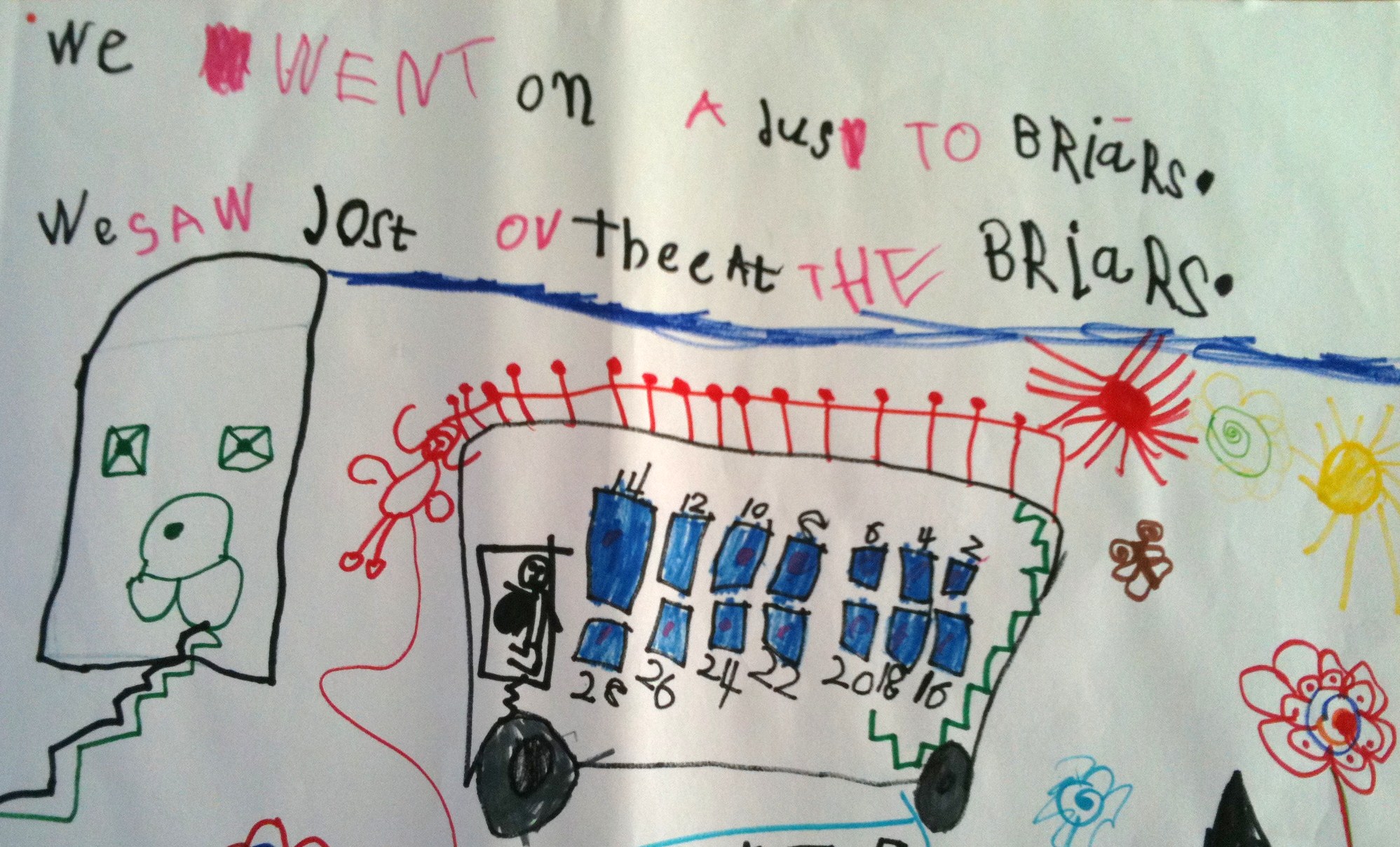
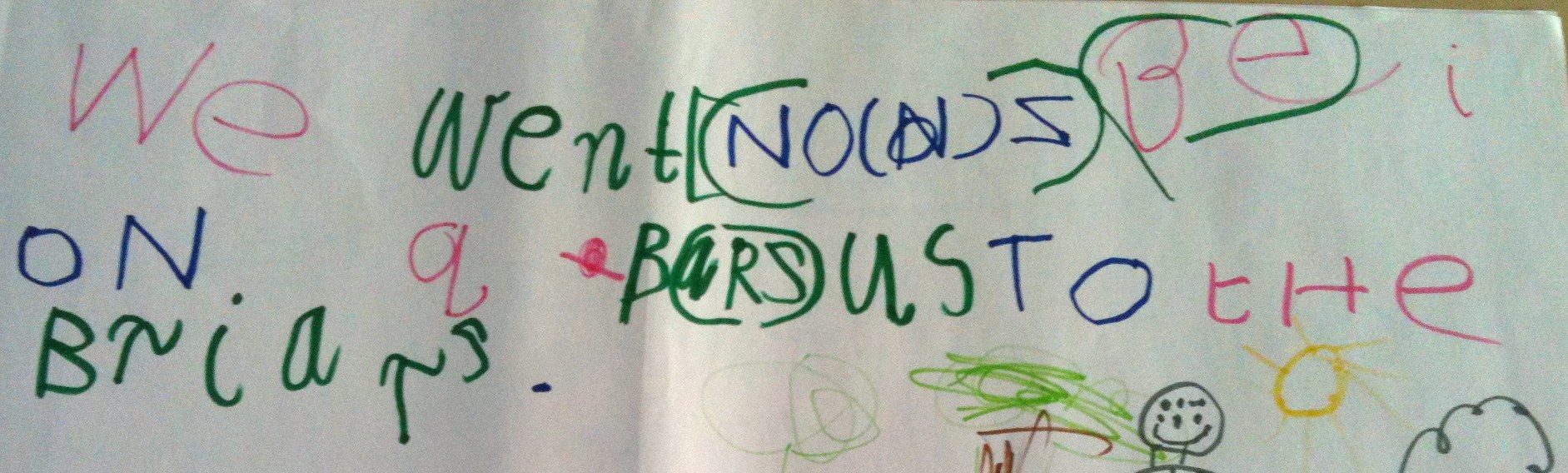
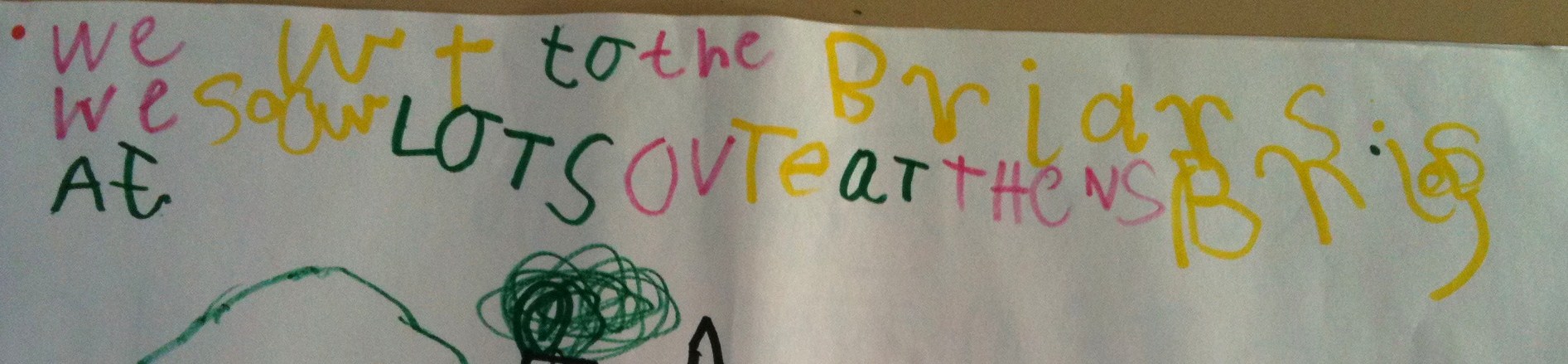
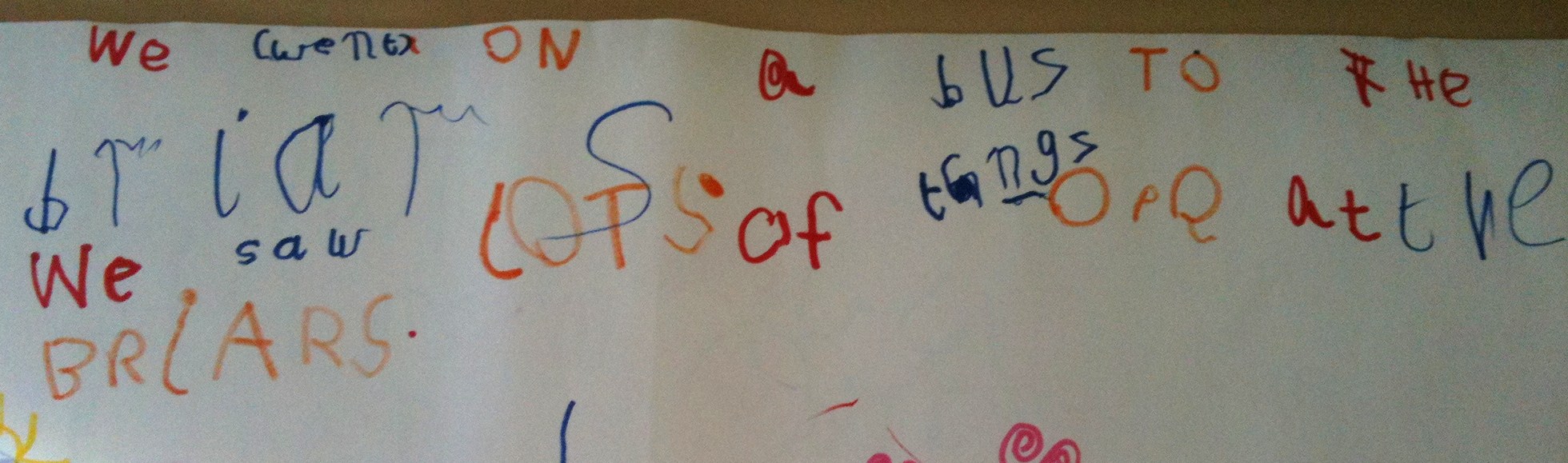
I’ve also included samples from this week’s Student Led Interactive Writing session. As a grade we brainstormed two sentences related to a shared experience. The sentences were:

  1. We went on a bus to the Briars.
  2. We saw lots of things at the Briars.

We have started THRASS this year and I’m struggling with it as I can’t quite get rid of how I’ve been teaching for many years. My children are referring to the chart and one child spelt ‘things’ by using ‘th’ as in thumb (I think it was thumb) and ‘ing’ as in king and then added an ‘s’. Probably no quite the THRASS way but still very clever. I’m using a number of strategies as I learn THRASS. One of my 5 year olds has learnt the charts, so I have my helper. Unfortunately, we often spend time looking for words that aren’t on the chart, so I’m adding to the charts as we go. Even after two days training I still find myself lost.

Cheers Nina

3 Comments

Filed under Uncategorized

Week 2: Term 2 (Week 10) of Formal Education in Australia – Writing Sample / Personal Journal.

I write to reflect and reflect to write!  It improves my practice…

I’ve made a committment to showcasing a different sample of writing each week. I’ve been so busy with my TPL Project that this is actually a few days late and includes one sample from today.

Focus: Capital Letters, Upper Case and Lower Case letters.

Inquiry Where do we find capital letters and when do we use lower case letters?

Children are given time to think and explore the room to find examples of capital letters and lower case letters. They are to investigate where they are used in writing samples. I think this helps to develop my student’s writing as many children can say the answer, but finding evidence for their thinking really shows their understanding. 

The children looked at the evidence collected during their search (as a group) and as a result were able to articulate how capital letters, upper case and lower case letters are used in words and sentences. They could also state when a capital letter is required. It’s interesting to note that a large number of children have been writing the word ‘I’ as ‘i’ in their writing and this came out in the discussion. Perfect! Hopefully, I’ll see the transfer of their new understanding in their writing over the next few weeks.

You’ll notice a ‘dot’ in the top left hand side of the page. I put this there so the children remember where to start their writing and which direction to write. There are a number of children who don’t need this, but every now and again they will surprise me and start from the other side.

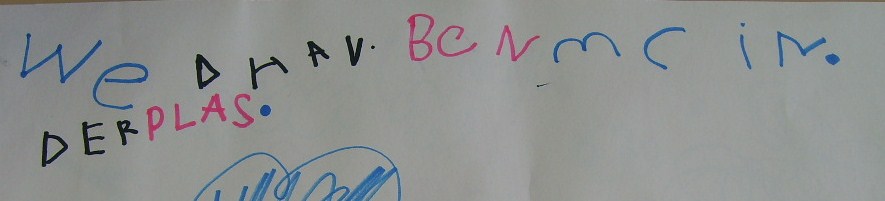
Today’s sample (above): I went to the dawn service and I had McDonalds and then I went home. Interesting to note that a number of children are representing ‘th’ as ‘v’ as in then ‘ven’. This will be a teaching point planned as a writing focus. Once again, I focus on, and plan sessions to teach the ‘concepts of print’ over and over.

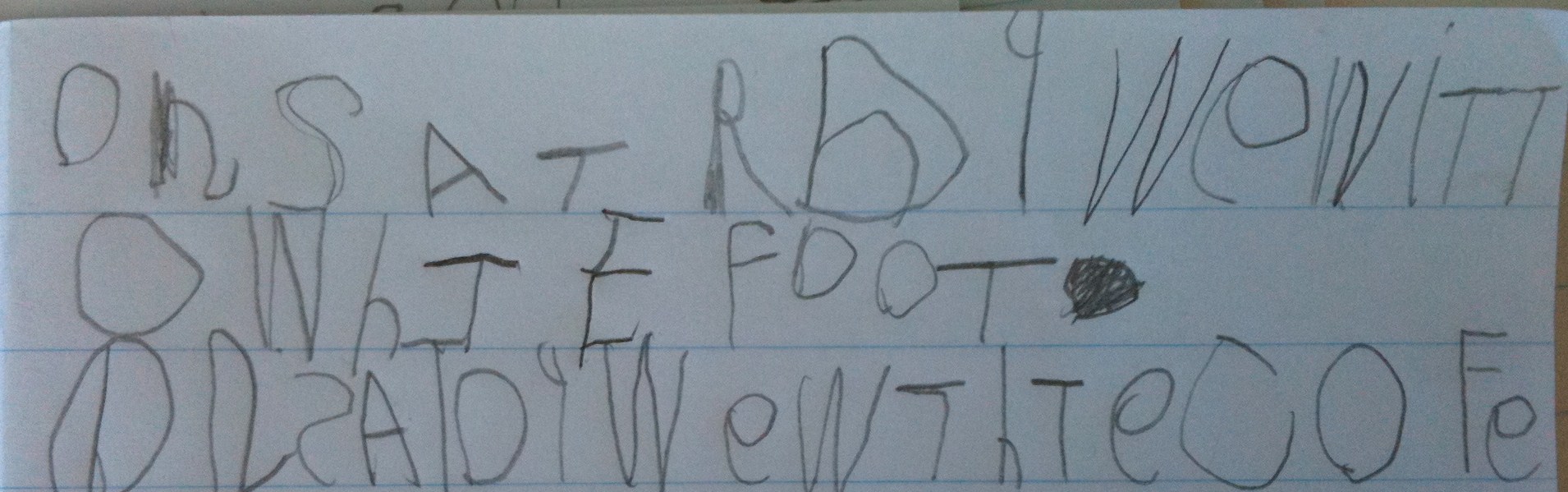
(above) This is an interesting sample. My initial reaction to this piece of writing was – it’s a string of letters. However, when I asked the child to read it to me I could easily read what the student had written. And even though I had identified where to start writing from by a dot in the corner of the page for this student, the child still started on the other side. This is not unusual and is a teaching point for this child. The sentence the child wrote is: I went to the football with my own ball. I liked to (omission) to football. It’s actually an excellent piece of writing by the child. Cementing the use of lower case and upper case letters will be addressed many times as will full stops.

 I love reading my student’s writing and looking for individual or common elements that need to be planned into an individual student’s teaching session or as a small group or whole class focus. I’ve found that the biggest ‘thing’ that stops learning is FEAR! We celebrate all attempts at ‘having a go’. A number of students are being challenged to write a two or three linked sentences to expand their ideas. However, that’s another post on scaffolding strategies.

I’m still researching ‘Read Aloud’ and sharing what I find with a colleague who is keen to develop this strategy. We’ve found that the powerful strategy that is becoming evident in our reading is ‘Think Aloud’. I’m using ‘Think Aloud’ myself when modelling writing. I’ll be writing more about this strategy as I think it’s really worthwhile spending time developing.

Cheers Nina

2 Comments

Filed under Uncategorized

Revisiting ‘Read Aloud’…. Is this another ‘not talked’ about gem?

I’ve been revisiting the ‘Read Aloud’ strategy and I think I’ve missed understanding the rigor involved in using this strategy to its full potential. I’m working on a post at the moment and think this strategy could improve comprehension significantly.

Cheers Nina – It will be up soon.

Leave a comment

Filed under Uncategorized

Term 2- Week 1: PrepD Student Led Interactive Writing ( Week 9 of Formal Education in Australia)

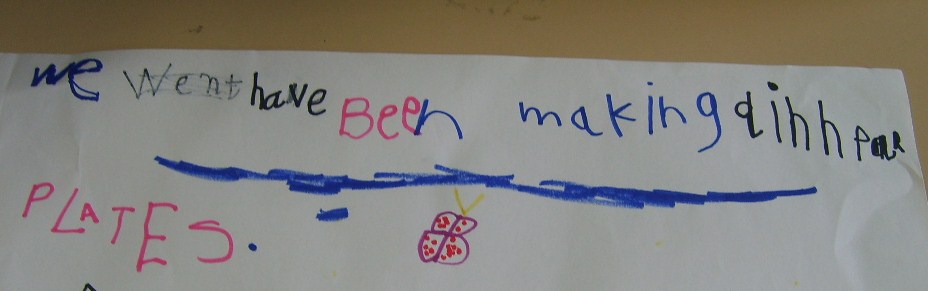
I’ve been so busy with my Teacher Professional Leave project that I’ve neglected this space and this is the place I write about the work I do. Firstly, I’m committed to sharing a snapshot of writing development in my class weekly for those readers who have asked. I’m showcasing Student Led Interactive Writing again. Why? I’m even more convinced that this is the best strategy to scaffold student writing development. This strategy supports young writers as they share, refine and practise taught strategies whilst writing.  The writer has the support of other children to prompt when needed and we’ve spent some time talking about and role-playing prompting. This strategy does allow for differentiation as it supports the range of abilities.  The children now have a number of strategies and tools to assist them when writing. I’ve written about this strategy many times, so if you would like to see other examples, please use the search box in this blog.

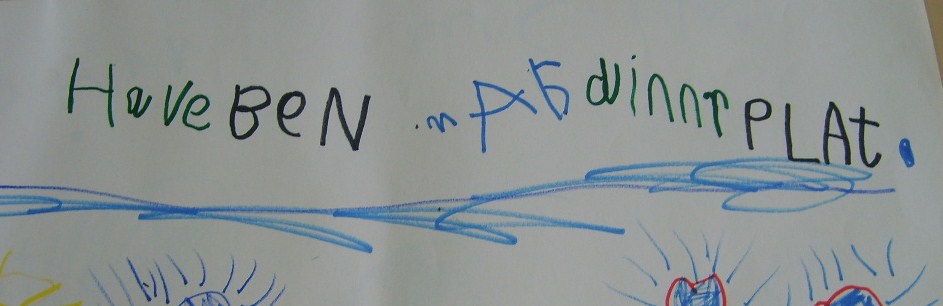
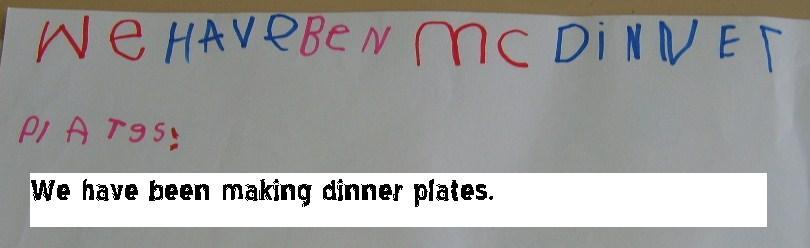
Each group has a large sheet of paper with children recording their names down the side of the sheet in their own selected color. (No names, my school or photos of children appear in this blog) This enables the teacher to observe each student’s word attack skills when writing. For this session, each group was randomly selected with a leader nominated. Group leaders are rotated with every child having a turn. The leader is responsible for the writing rotation of  group members and also ensures that the team sets up and packs up properly. Our sentence was composed by the grade about a common experience. The sentence: We have been making dinner plates.

Cheers Nina

2 Comments

Filed under Uncategorized

A Day Out with the Big Kids: Instructional Rounds

I spent today with a large group of principals brought together to learn about Instructional Rounds. One of my Preps told me their ‘head was full’ earlier this year and today I can relate to this comment… It was a real privilege to be able to be a part of this group and I say this in jest… ‘to listen to secret Principal business’.

I was really delighted to listen to the reflections, which often came back to understanding and respecting a classroom teacher’s feelings about being observed. One participant said to me, ‘I haven’t forgotten about when I was in a classroom’.

What do you know about Instructional Rounds?

This is a very quick post to draw your attention to a ‘ning’ we set up to collaborate and discuss Instructional Rounds and the E5 Instructional Model. My colleague and I are committed to sharing our journey with all and removing any fear educators have about this model. If you would like to learn more about Instructional Rounds and the E5 Instructional Model and follow our journey, here is the link.

http://instructionalroundsineducation.ning.com/ 

You are most welcome to join. At present, the ‘ning’ is not private, but this may change in the future. I must say thank you to the presenters Terry and Mark for a terrific day!

Cheers Nina

1 Comment

Filed under Uncategorized

Myths and Opportunities: Technology in the Classroom by Alan November

I’m becoming a fan of Alan November and I’m enjoying listening to his thoughts on education. The video I would like you to watch won’t upload here, but if you follow this link to http://instructionalroundsineducation.ning.com/ and look in the video section you’ll be able to listen to Alan November discuss the ‘Myths and Opportuinities’ of technology in the classroom. I recommend it!

I noted these ideas as I watched the video:  Global- Fearlessness, Authentic Conversations, Engage, Teacher Role Change, Guidance, Contributor, Community, Student Led, Shifting Control, Interdisciplinary, School Design, Critical Thinking, Critical Skills, Reflection, WALT & WILF, Life Long Learning, Collaboration, Research, Communicator, Industrial Model / Collaborator Model:  Big themes of ‘Best Practice’?  Have I missed any?

Cheers Nina

1 Comment

Filed under Uncategorized

Are we ready for Generation Alpha? You can’t be my teacher…

Babies born from 2010 are Generation Alpha and many will be commencing formal schooling in 2015. That’s not long…Are we ready or are you ready?  These children will come from smaller families, will have been exposed to many forms of entertainment and will already be used to and using many forms of technology. As a generation, they will work longer than any other generation and will have a number of careers.

I’m writing this in response to a video shared with me. Something about this video made me stop and think. I’m already seeing a change in our young students. They are not frightened of technology, expecting to be taught and come to school with many expectations about what they will do and learn.

Do we have the skills to teach and engage these children? How can we skill ourselves to meet their needs? How comfortable do you feel about your practice?

Hmm! Now that’s confronting.

Cheers Nina

3 Comments

Filed under Uncategorized