Category Archives: Uncategorized

The International Baccalaureate Primary Years Programme – Unpacking attitudes with Australian 5 & 6 Year Olds.

Unpacking the International Baccalaureate Learner Profile and attitudes with Prep children (5 and some 6 Year Olds) is ongoing. I’ve been using all opportunities within and outside the Programme of Inquiry to unpack the Learner Profile and attitudes in context. Young children need context to ensure meaning.

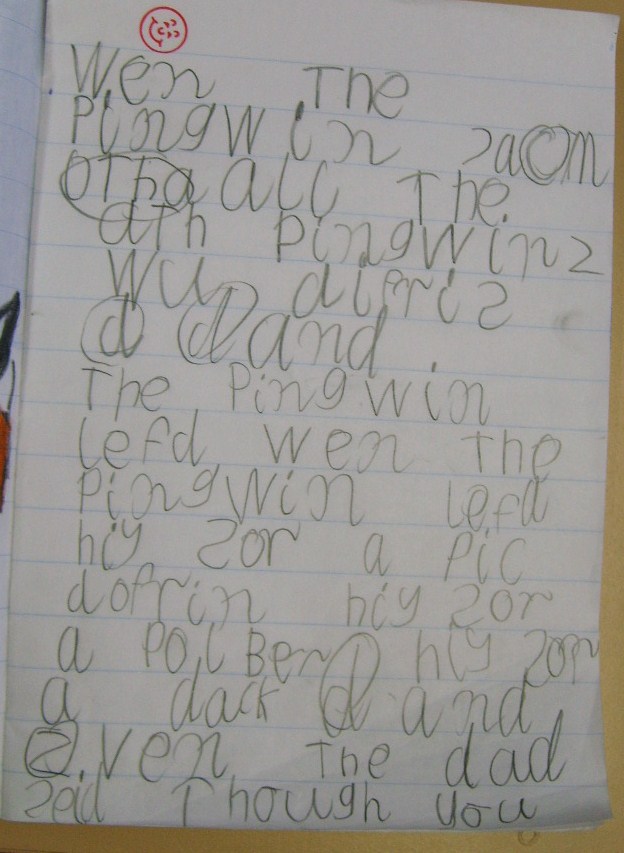
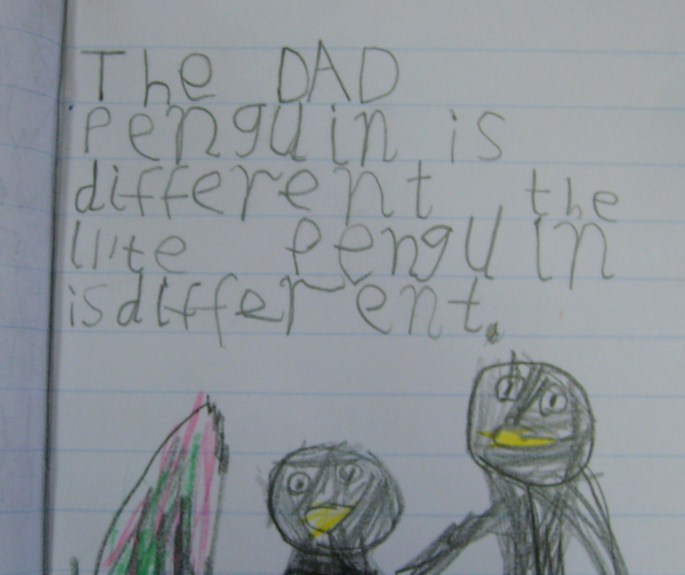
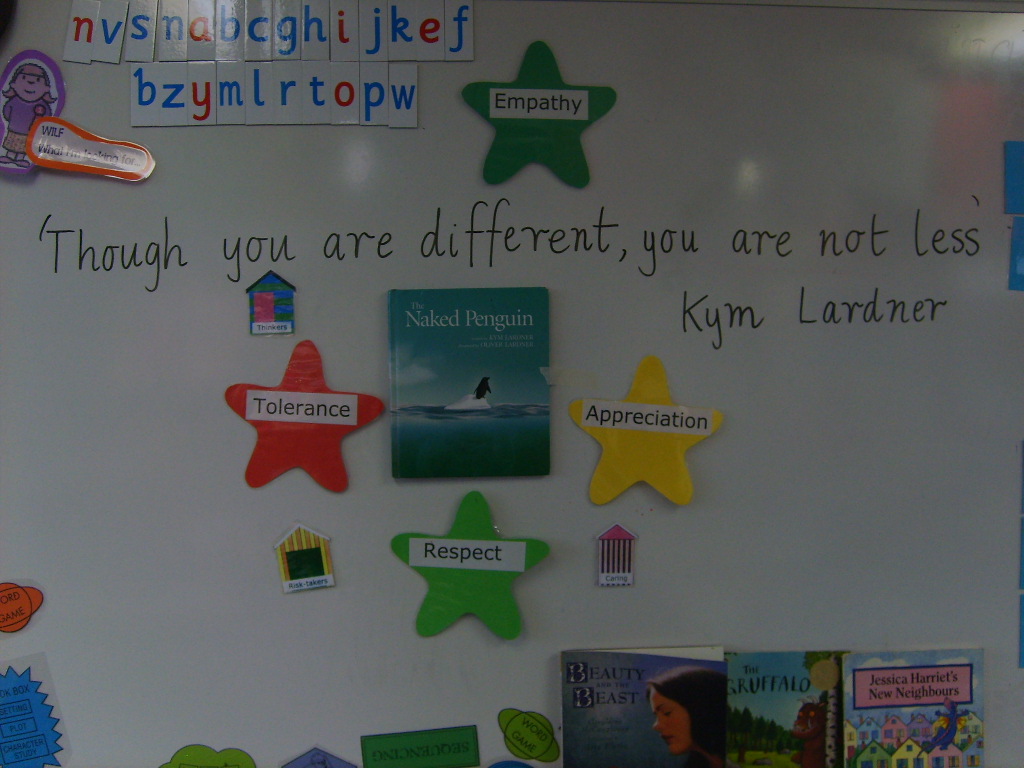
This week we have had Kym Lardner, an Australian author visit our students. I have been introducing Kym’s stories to the children. Kym’s books relate well to the Learner profile and attitudes. Our favourite book is The Naked Penguin. This story is about accepting difference.

Linking the Learner Profile: Risk Takers, Caring, Open-minded, Thinkers
Linking the Attitudes: Respect, Tolerance, Empathy and Appreciation

After reading this story many times, the children and I selected the attitudes related to this story. They could relate these attitudes to the text. I’m impressed! We’ve been talking and living these attitudes for a while. It takes time to unpack these. My Preps are starting the second semester of their first year of formal education. They are young learners, but very capable.

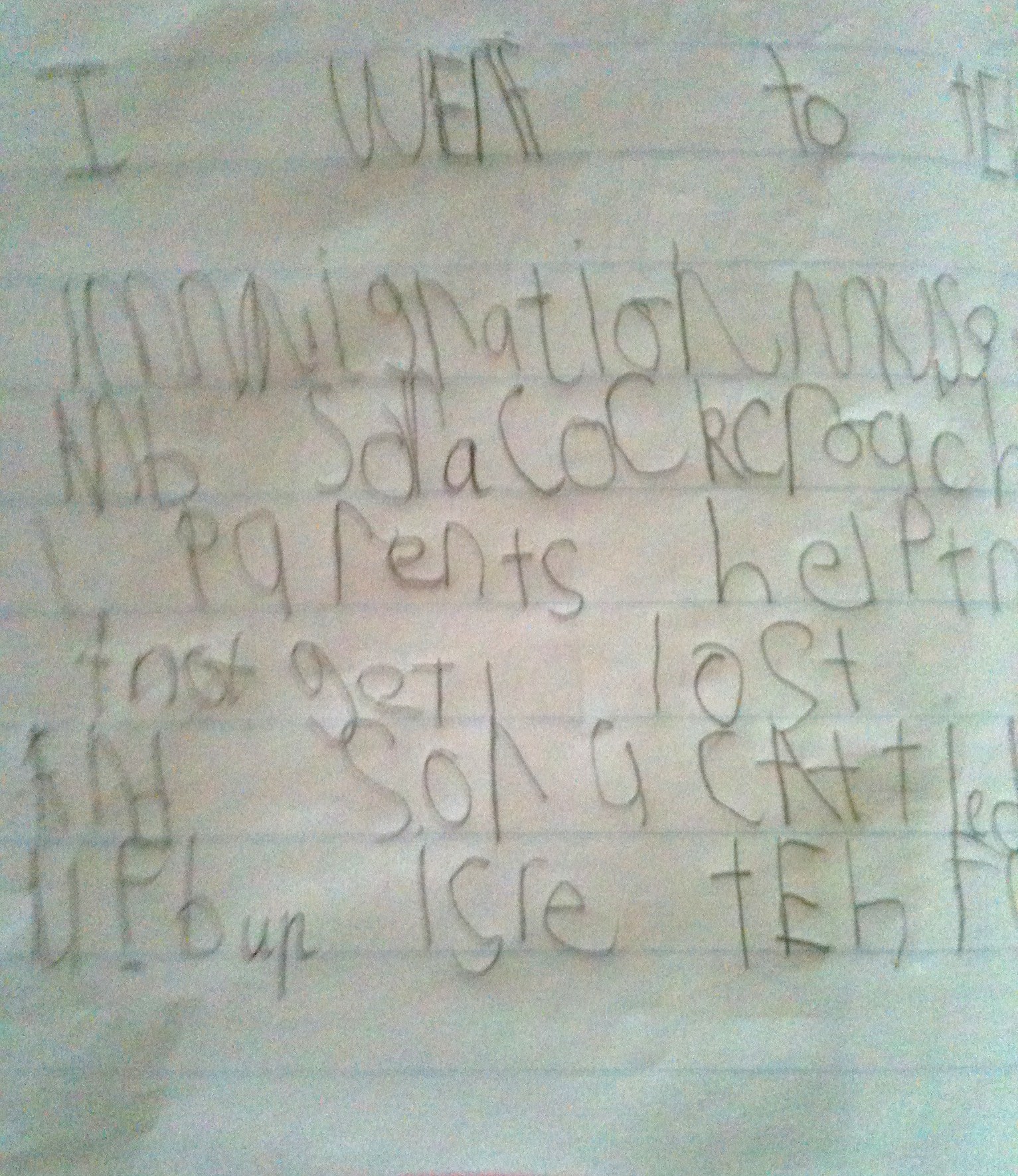
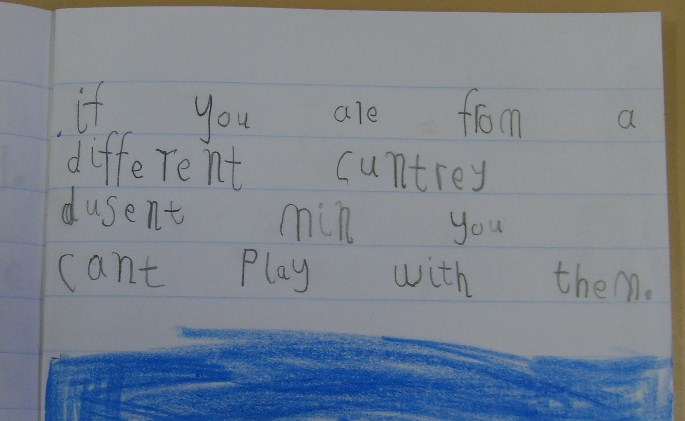
I’ve selected a range of student’s writing in response to a quote from the story.

Quote: ‘Though you are different, you are not less.’

The IB PYP extends children’s thinking, encourages children to ‘go deep’ and I believe leads to improved student learning. Please read the selected responses.

Cheers Nina

6 Comments

Filed under Uncategorized

What is Differentiated Instruction?

Rick Wormeli: Keynote on RTI and DI at the CLMS Annual Conference, Feb. 26-28, 2010, in Sacramento. This is an excellent clip to show your school staff. Rick answers the questions teachers are asking. This is a ‘must watch’ clip! So what is differentiated instruction?

http://instructionalroundsineducation.ning.com/video/rick-wormeli-on-differentiated

Visit the Instructional Rounds ning, go to videos and view Rick Wormeli’s clip. It’s worth the visit.

Cheers Nina

17 Comments

Filed under Uncategorized

My Preps are ‘rocking on’. Last journal for semester 1- Week 19 of formal education in Aus: 5 & 6 Year Olds – We’re Celebrating!

We’re celebrating our journey this week. Tomorrow, we have our 3 Way Conferences and my students will be explaining their learning to their parents. This week, many of my students had another learning leap and this is evidenced in their independent writing. Their portfolios are ready to show and it amazes them how much they know.

 The ‘freebie’ word was Saturday. My students are using Saturday and Sunday as a sequencing structure  for their journals at present. I intend to introduce simple pre-planning scaffolds to help them structure their writing early next term. Have a look at the commas in sample 3 – love that ‘have a go’ attitude of my preps. We’ve been looking at commas when reading, and my students have been finding out what they do.  I’m now seeing commas being used in their writing without prompting.

Cheers Nina
Leave a comment

Filed under Uncategorized

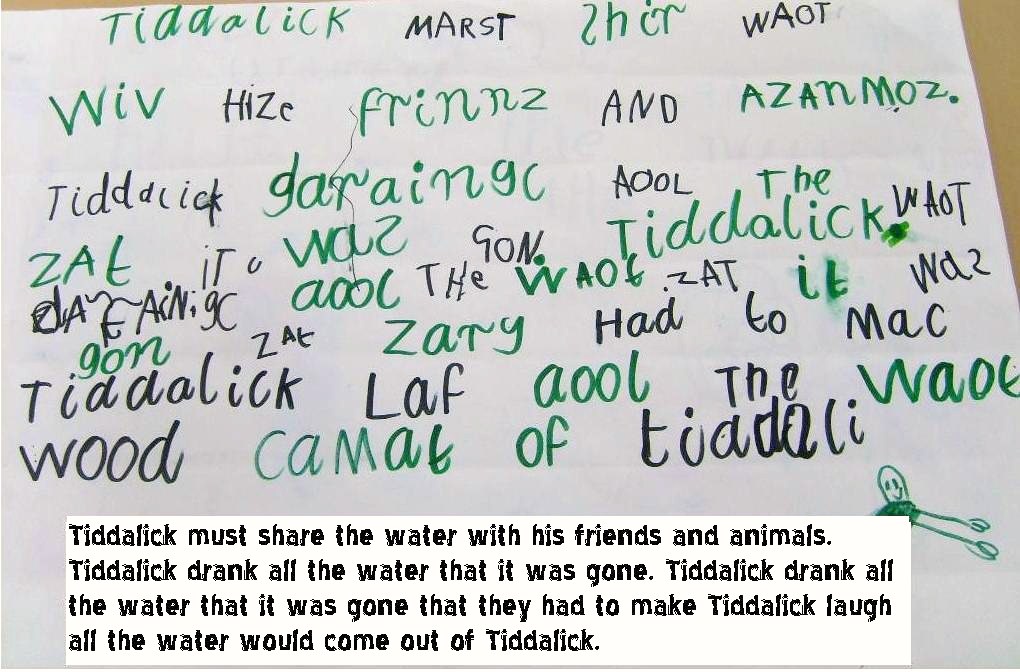
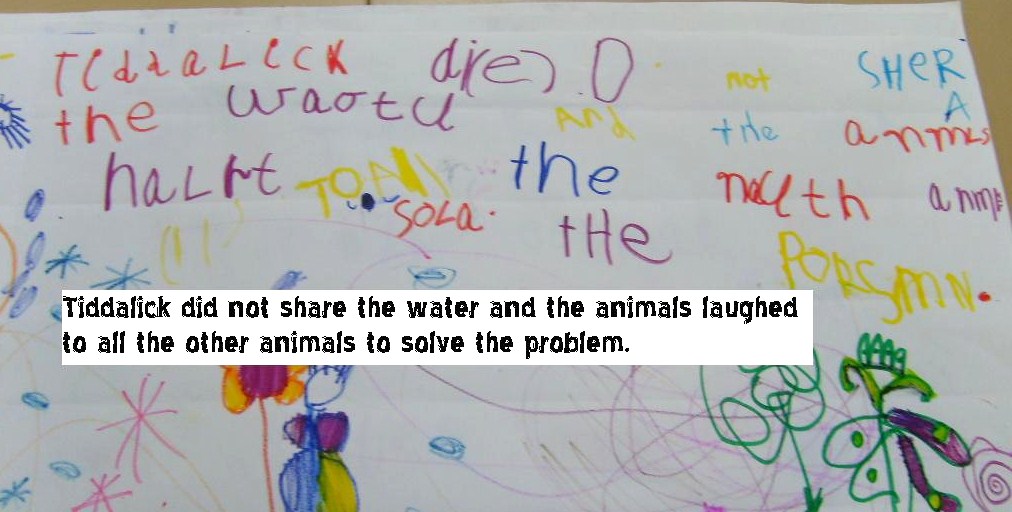
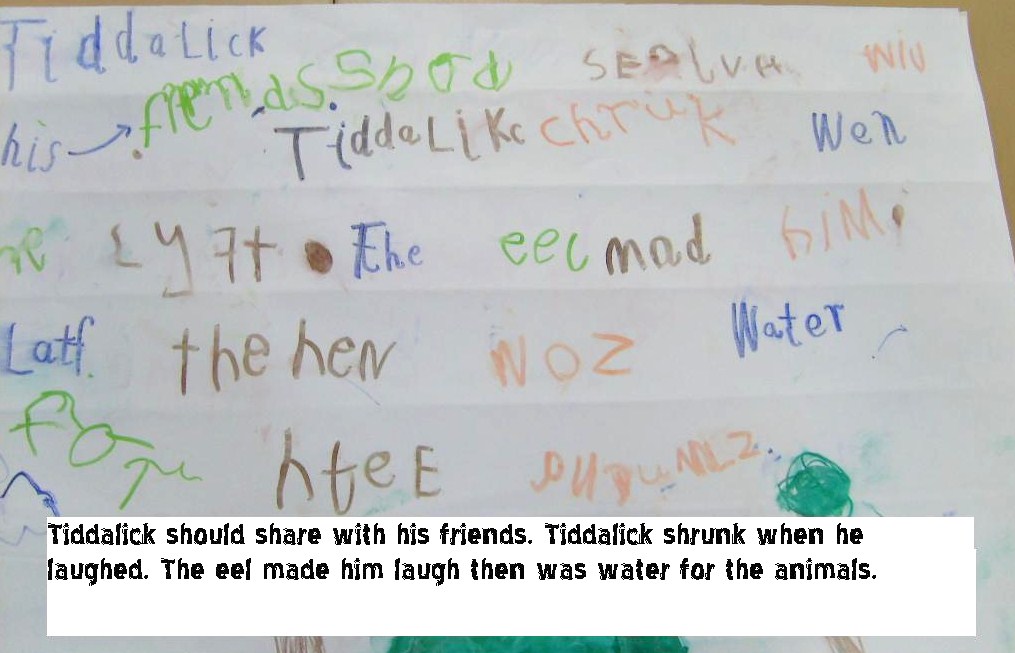
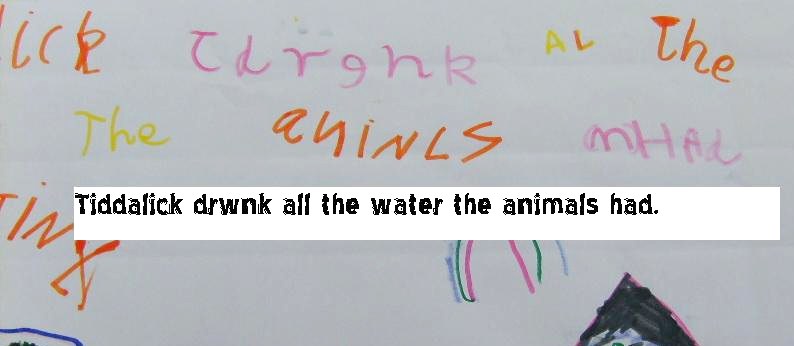
PrepD Student Led Interative Writing: Week 10- Term 2 Collaborative ‘Thinker’s Writing’:Tiddalick the Frog. Week 18 of my student’s first year of formal education in Australia

Background: I’ve been focusing on looking at a text deeply, rereading a text to my students many times, and addressing something different each time. We’ve been looking at narratives, starting from reading… and leading into writing their own. This week we’ve continued looking at the main idea in terms of the big concept, and the message or author’s intent. Why was the story written? What compelled the writer to tell this story, and what can we learn from, and about ourselves from the story?

We’ve unpacked the story into the beginning, middle, end and problem. We’ve also been discussing the story ‘beyond the text’, and teaching the children the term ‘going deep’. Today we looked at Tiddalick and how he felt, and why he did what he did. My students came up with some really enlightening ideas in support of Tiddalick and against.

A few weeks ago I read a Mem Fox book to my students. I read it seven times before my student’s actually identified the big concept and overarching idea. Spending time rereading one text is very valuable. Looking at the language used by the author also helps build the rich vocabulary that children need to read and write. I’ve also focussed recently on adjectives or ‘coloring in words’ and ‘going deep’ into a text enables these sorts of discussions.

This week, I had two teachers spend part of a morning with me and my students. My children wrote a retell about Tiddalick using the PrepD Student Led Interactive Writing strategy. It was one of those mornings when there were lots of interruptions and it wasn’t until during our share session and looking closely at their writing, that I thought, there’s a lot to celebrate here! It’s nearly the end of their first semester of formal education and these students are just at the beginning. I can’t wait to see what they’ll be doing at the end of the year.

When looking at these writing samples, I can see many teaching points i.e sh and th, continued focus on upper case, lower case, sentence structure and simple punctuation. It’s also important to add that this is ‘thinker’s writing’… it’s not safe writing like journal writing. These students have to work collaboratively to form their text, and then prompt and support each other to write.

The by-product of collaborative grouping is developing the children’s ability to work cooperatively with others… and yes, there can be disagreements, but unless children are put into these situations they will not develop the skills to negotiate, compromise and make good choices  in order to get the job done.

Cheers Nina
4 Comments

Filed under Uncategorized

Learning to See, Unlearning to Judge – Instructional Rounds: The ‘By-Product’ and ‘Inner-Think’!

I’m not surprised my posts on Instructional Rounds are being read. Since writing this I’ve been a classroom teacher being visited as part of the Rounds process at my previous school and visited many classrooms myself. Either experiences are very valuable for a teacher.

Today was my last day as a member of an Instructional Rounds Pilot group. The pilot group was the Southern Metropolitan Region (Victoria, Australia) principals.

It’s been a great experience and has given me an enormous amount to reflect upon in terms of my own practice. I have been very fortunate to be involved in this pilot, and as a classroom teacher, it’s the by-product of Rounds that has made me have aninner-think’ into my own practice.

Instructional Rounds follows a strict set of protocols. Look down, not up! It is about the practice not the teacher.

Identification of a ‘Problem of Practice’ by a school.

The term ‘Problem’ explained – not negative

The term:’ Problem’ – refers to a scientific problem to observe

‘Problem’ is a neutral term.

The Problem of Practice – must:

Focuses on the Instructional Core (student- teacher – content: Interaction)

Be observable

Be actionable

Connects to a broader strategy

Be high-leverage: able to make significant difference

Is not too vague, not too specific – doesn’t stop open- ended evidence

Learning to see, Unlearning to judge: Observations must be non-judgemental

“The discipline of description is the core practice on which rounds are based….” (Elmore)

Describe what you see

Be specific (fine-grained)

Pay attention to the instructional core (teacher, student, content)

Evidence must be related to the problem of practice

Stay in the descriptive mode; look down – not up, focus on students, not the teacher

 The By-Product & Inner-think!

 Predicted Next Level of Practice

Prompt: Describe what it would look like if the school had solved the Problem of Practice?

What would:

Teachers be doing?

Students be doing?

What would the tasks look like?

It’s the discussions around the ‘Predicted Next Level of Practice’ that I have reflected on deeply. When visiting my classroom what would be observed? What am I doing? What are my student’s doing? What do my tasks look like? When planning, I’m now reflecting on these questions, making changes and feel as a result my own practice has improved. This is the by-product and why I believe it is essential that classroom teachers, regardless of experience need to be included in future Rounds.

If you get an opportunity to be part of an Instructional Round or are in a school where a Round is taking place, please embrace Rounds. I’ve been the observer this time, but I’m sure in the not so distant future my practice will be observed too.

Cheers Nina
6 Comments

Filed under Uncategorized

When it clicks it clicks: His Journey! It’s all about readiness…

I feel like I’ve neglected this space but today was a great day for one of my students. The transformation of a student’s understanding and the thrill that was experienced by the child is so rewarding for teacher and student. The expression on the child’s face said it all for me. That realization that he is a writer and what he writes can be read by others. I’ll keep posting about this child’s journey throughout his first year of formal education in Australia (Prep – 5 & 6 Year Olds). All posts referencing this child’s journey will be called, ‘His Journey’.

February

April

June 7th   I went to soccer. This child is going to ‘zoom’.  All I can say is we need to be patient and positive with young writers. It’s all about readiness, nurture and trusting the journey.

Cheers Nina

2 Comments

Filed under Uncategorized

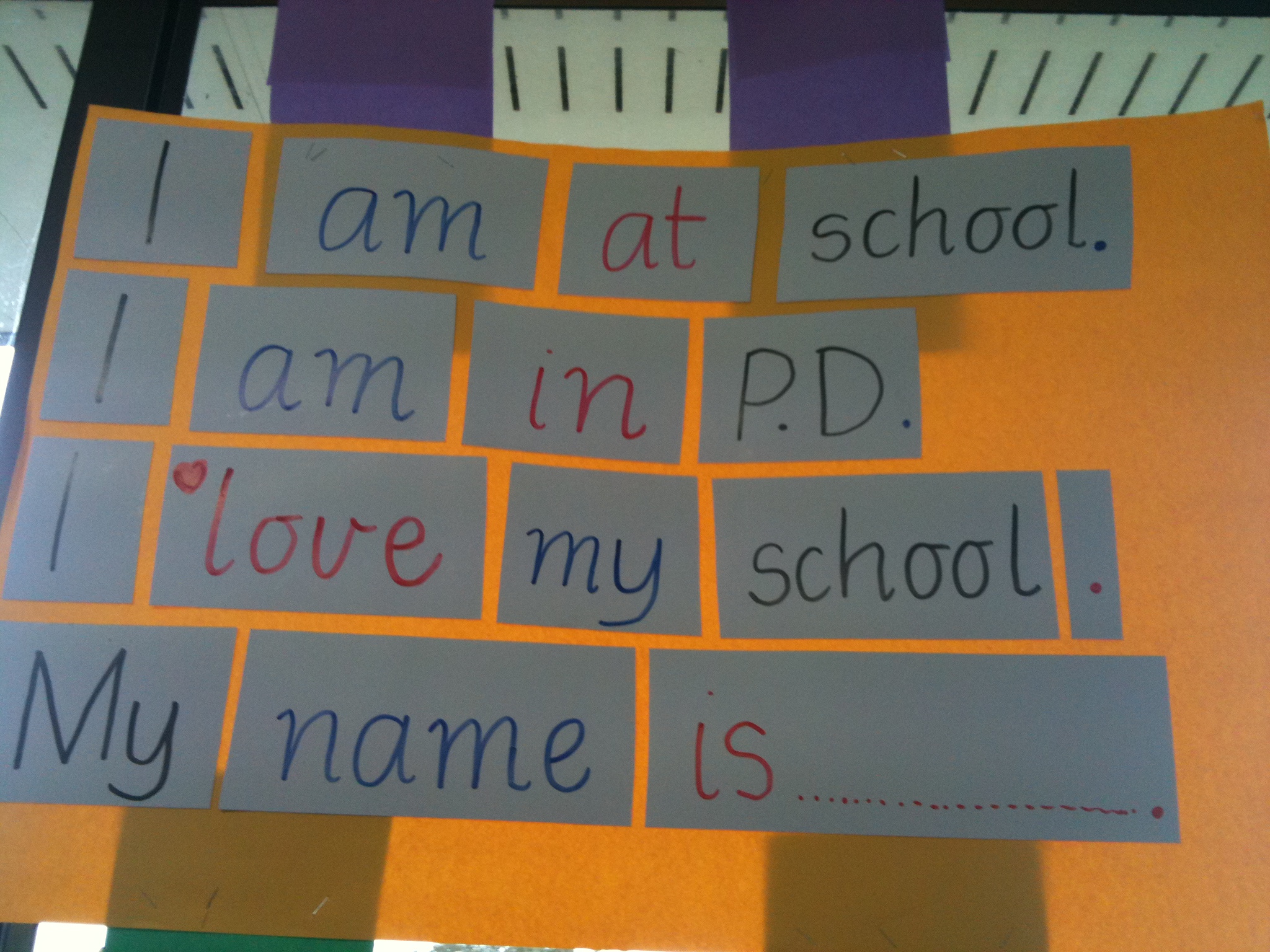
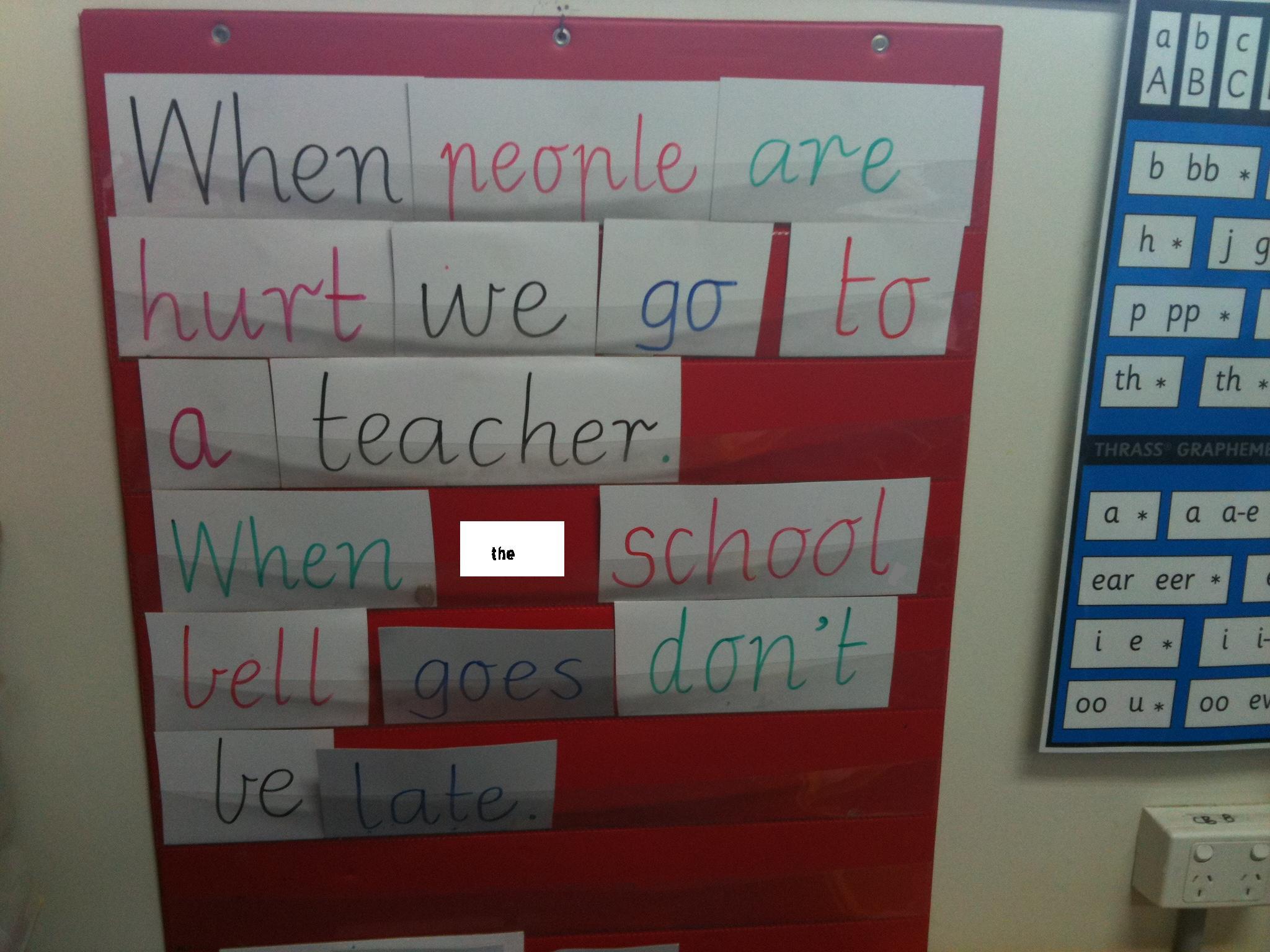
The Reading Wall & The Sentence Board:Essential in an Early Years Classroom!

Last week I had 6 teachers visit from another school. When we were discussing my program, I showed them my sentence display board and how this board supports the development of a reading wall. A Language Experience reading wall is a wonderful way to support beginning readers. Every Early Years classroom must have a sentence strip board.

Method:

Student’s brainstormed sentences are written using the Early Years Shared Writing strategy. The sentences are written on sentence strips, cut up and placed in the sentence board. When 4 sentences are made, the text becomes a ‘little book’ and the sentences are pasted on large sheets of paper and the board is ready for developing the next text. This becomes the Reading Wall and is read everyday.

Using this strategy quickly builds confidence and helps develop each student’s sight vocabulary. I use this strategy mainly at the beginning of the school year. It is a great strategy to use with all Early Years students  and is part of the Language Experience Approach.

 Cheers Nina
Leave a comment

Filed under Uncategorized

25 000 Visits: Thanks for visiting!

I’m not sure what I’m more pleased about, finishing my reports (draft 1) or 25 000 visits to this blog. Anyway, with reports nearly finished I can now leave the ‘land of challenge’ and return to the ‘land of nice’. Keep visiting & I appreciate comments if you have the time.

 Photo: Beautiful Melbourne (taken last week)- looking out from the ACEP penthouse!

I’ve talked about my Teacher Professional Leave a number of times in my blog. I’ve provided the link below and an invite is extended to all visiors to this blog to join. The ning is about Instructional Rounds, the e5 Instructional Model and ‘Best Practice’. There is really something for every educator and it’s also an opportunity to explore a 21st Century social networking platform being used for an educational purpose.

Link: http://instructionalroundsineducation.ning.com/ 

 Cheers Nina
Leave a comment

Filed under Uncategorized

The Writing Spacer: Better than two fingers!

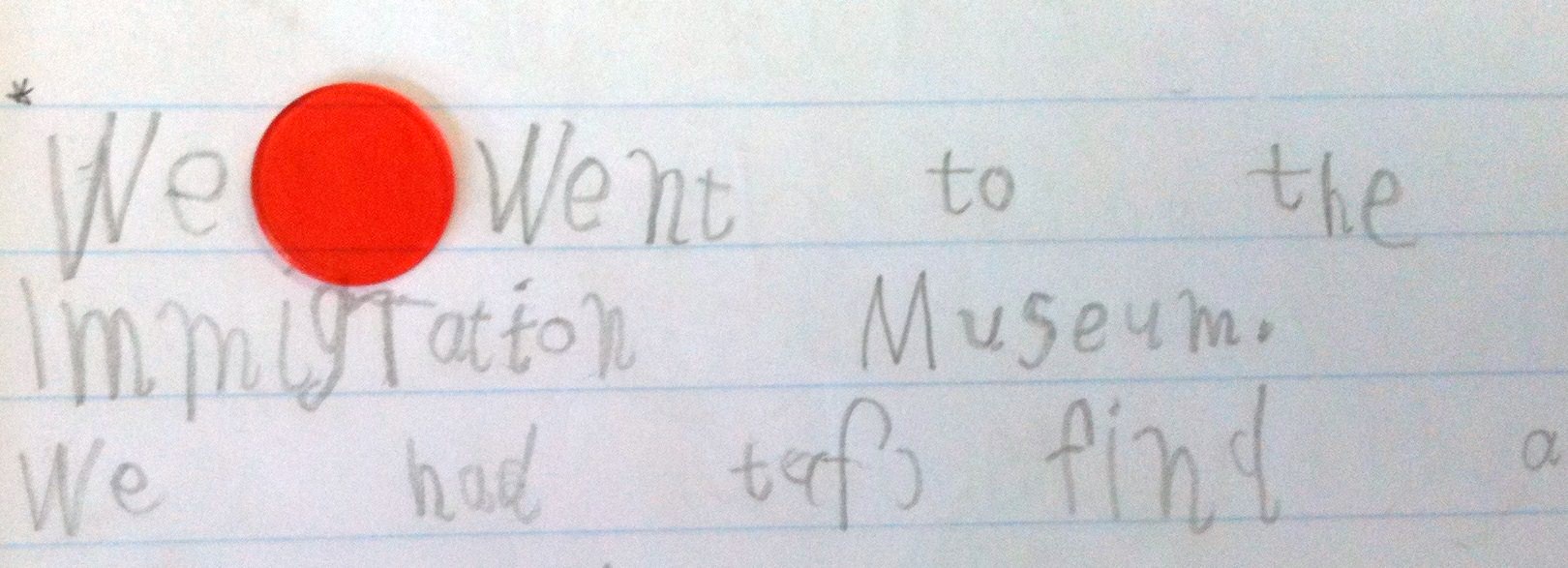
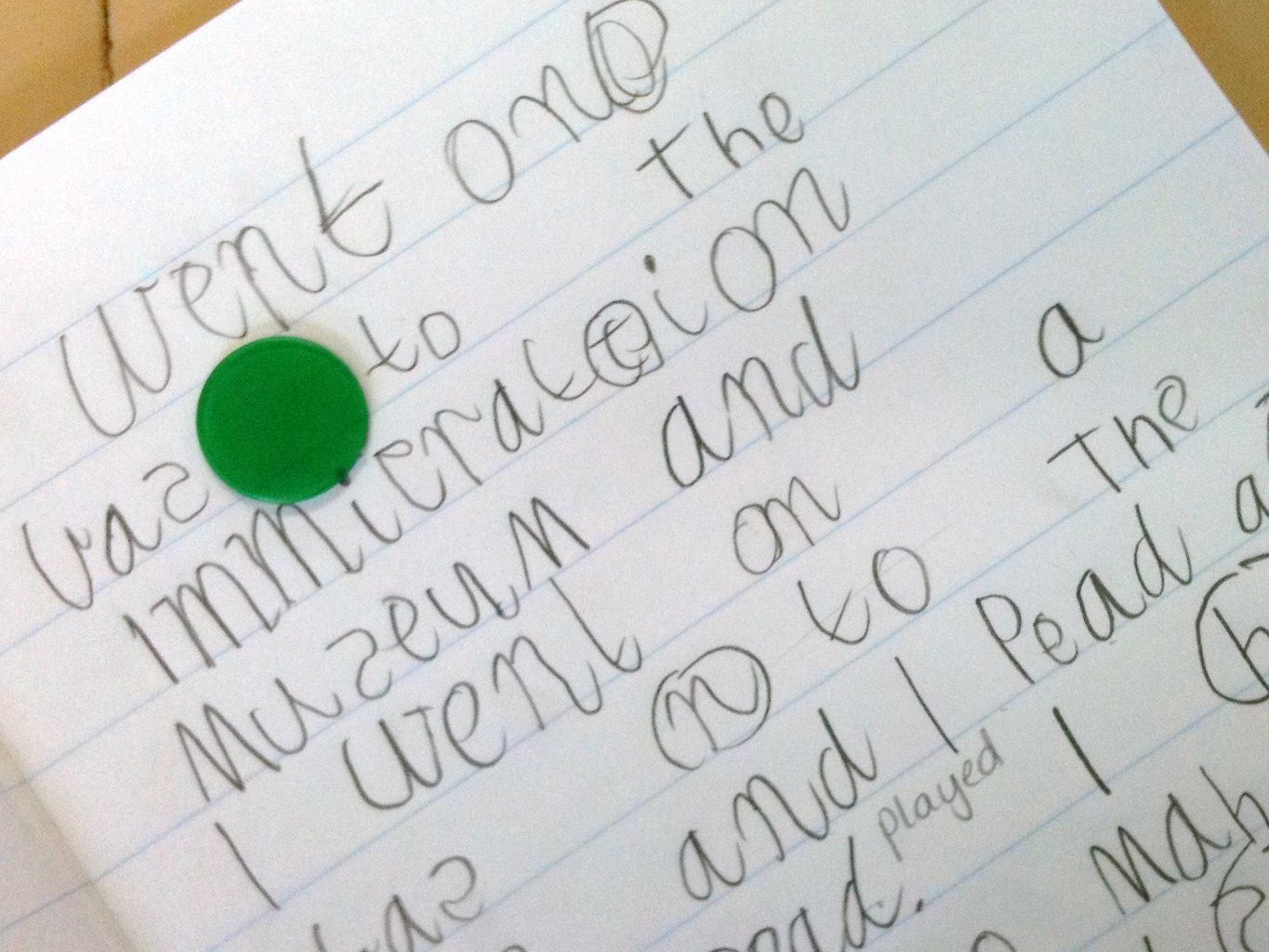
I’ve had a lot of feedback about this very simple idea… and it works! I’m encouraging all children to use the writing spacer until they feel confident about leaving spaces between words. Here’s a couple of images showing the type of counters they’re using. These counters are colored but clear.

Cheers Nina
8 Comments

Filed under Uncategorized

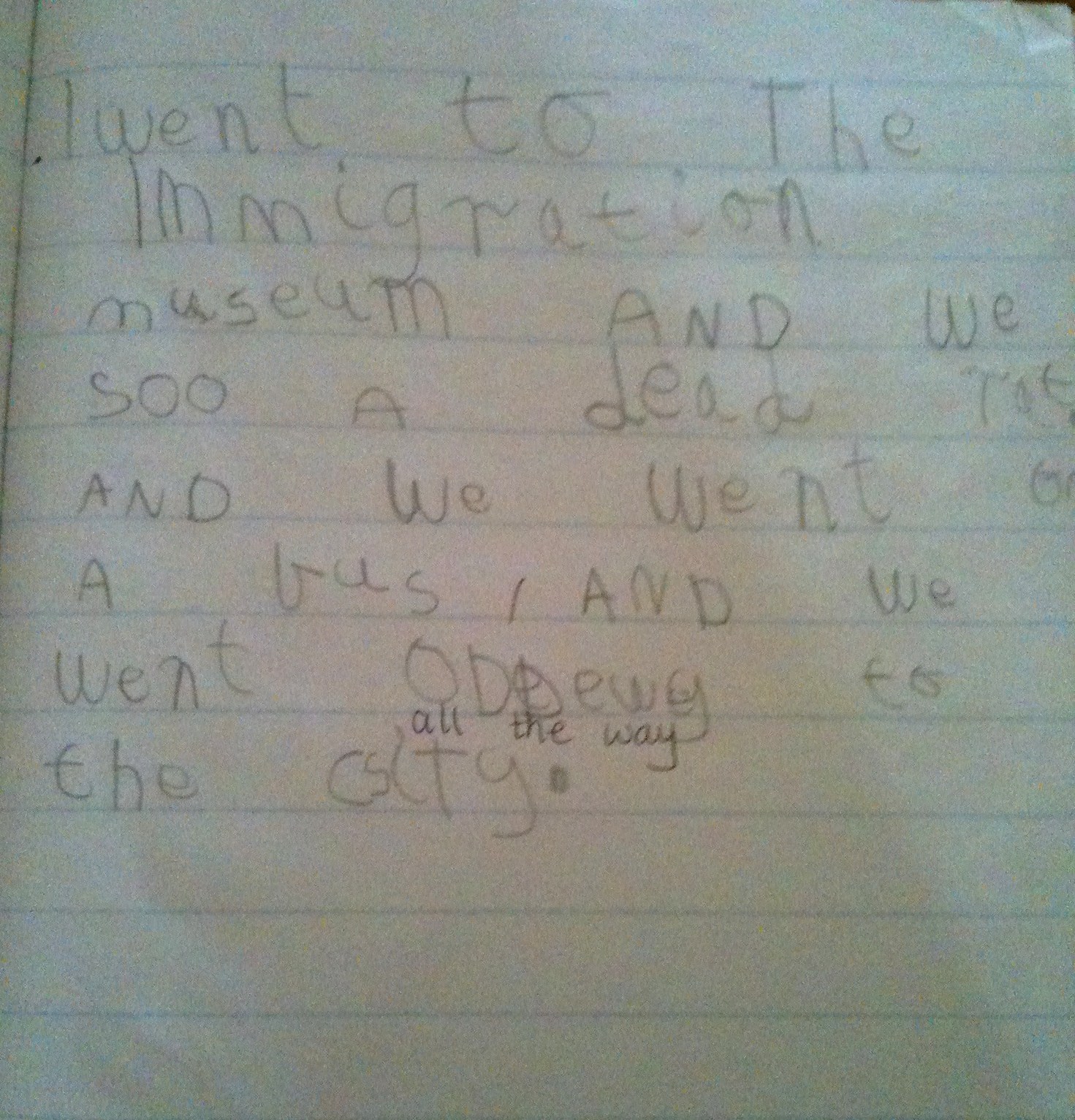
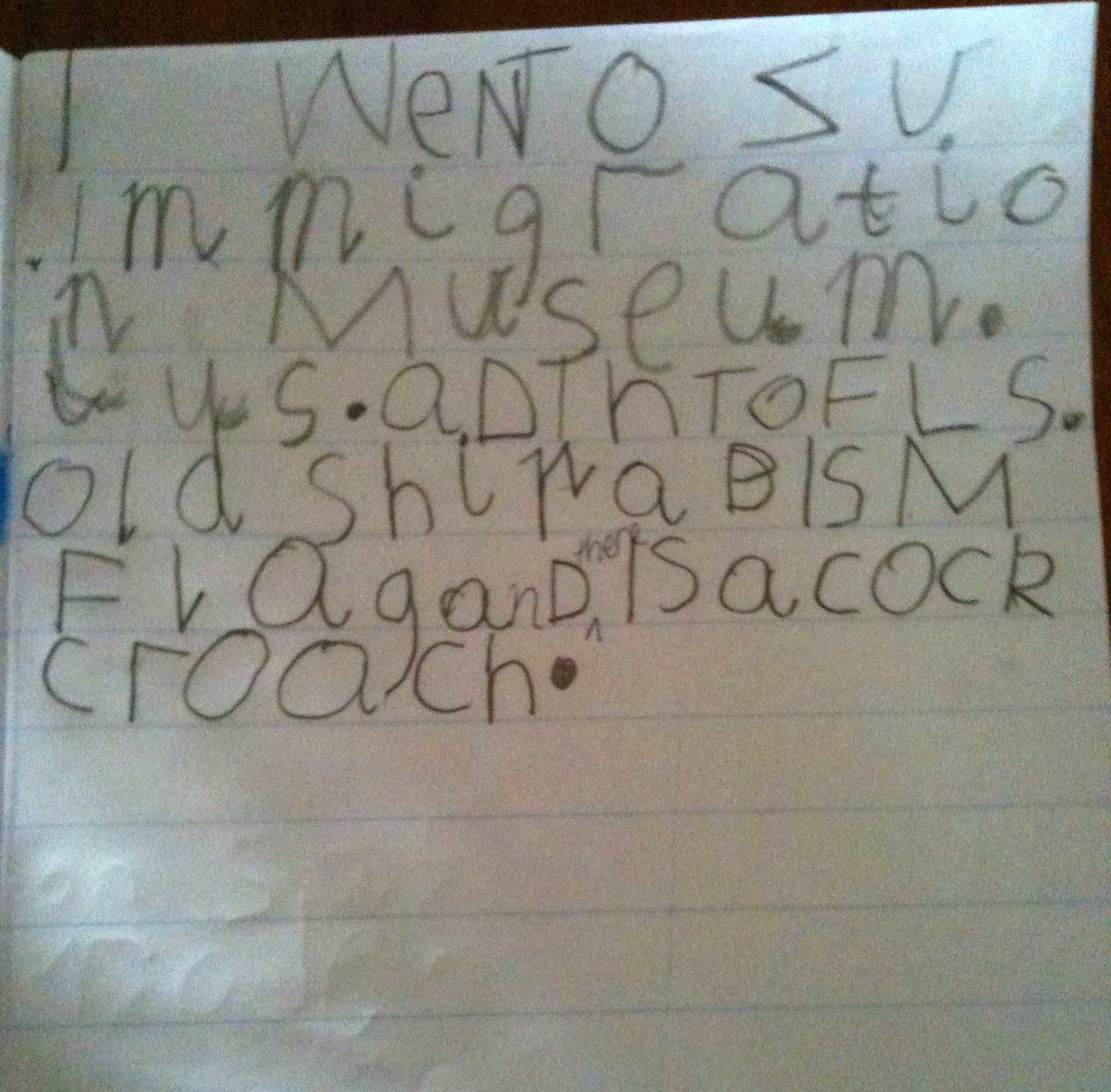
Week 14: First Year Formal Education for Victorian Preps (5 & recently turned 6 Year Olds) Independent Writing

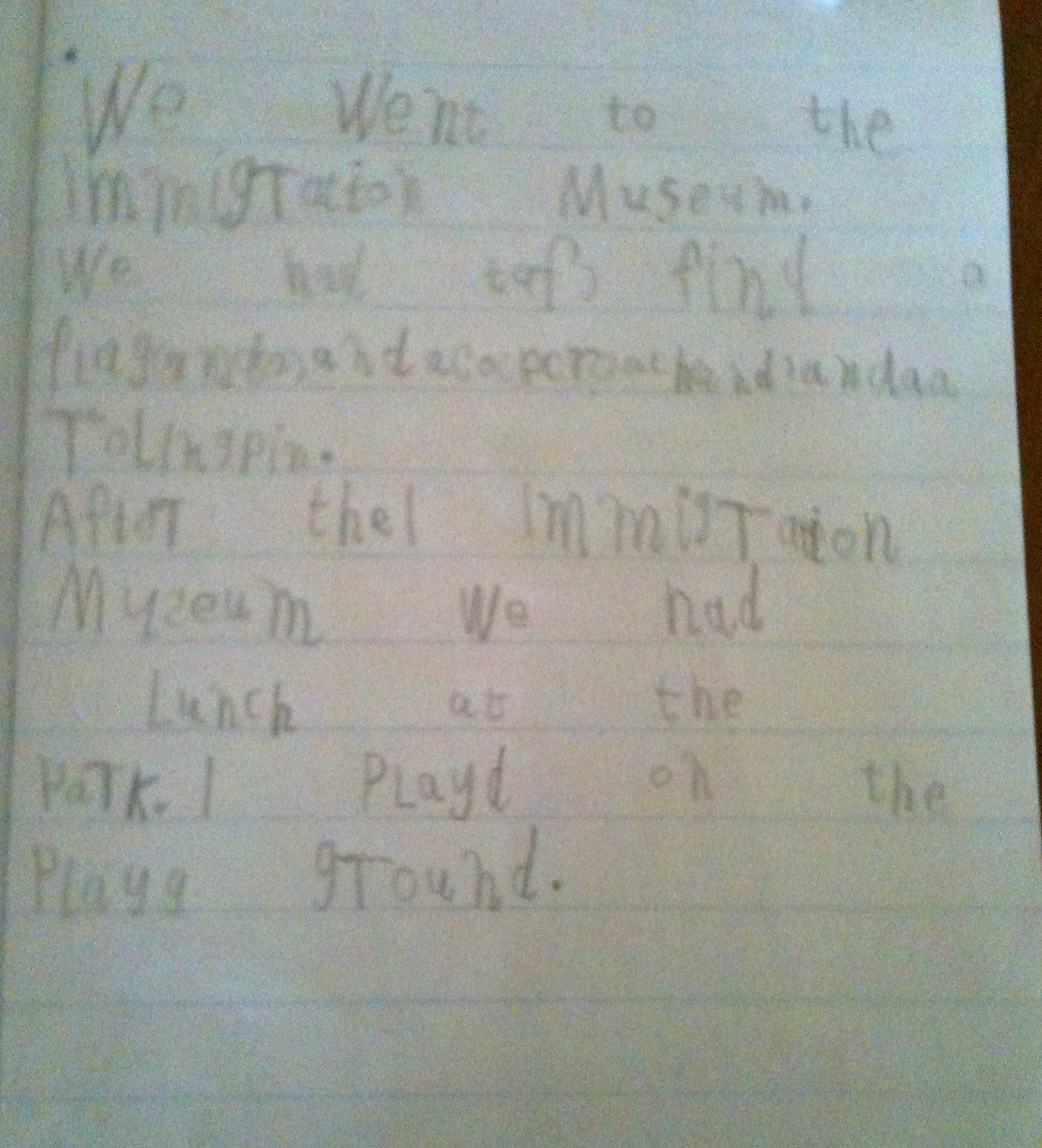
A very quick post because I’m writing school reports and I’m sorry about the photo quality… This is my Preps first year of schooling, most are 5 years of age and a small number are 6 years old. Some of my 5 year olds have only recently turned 5. This puts their writing development into perspective.

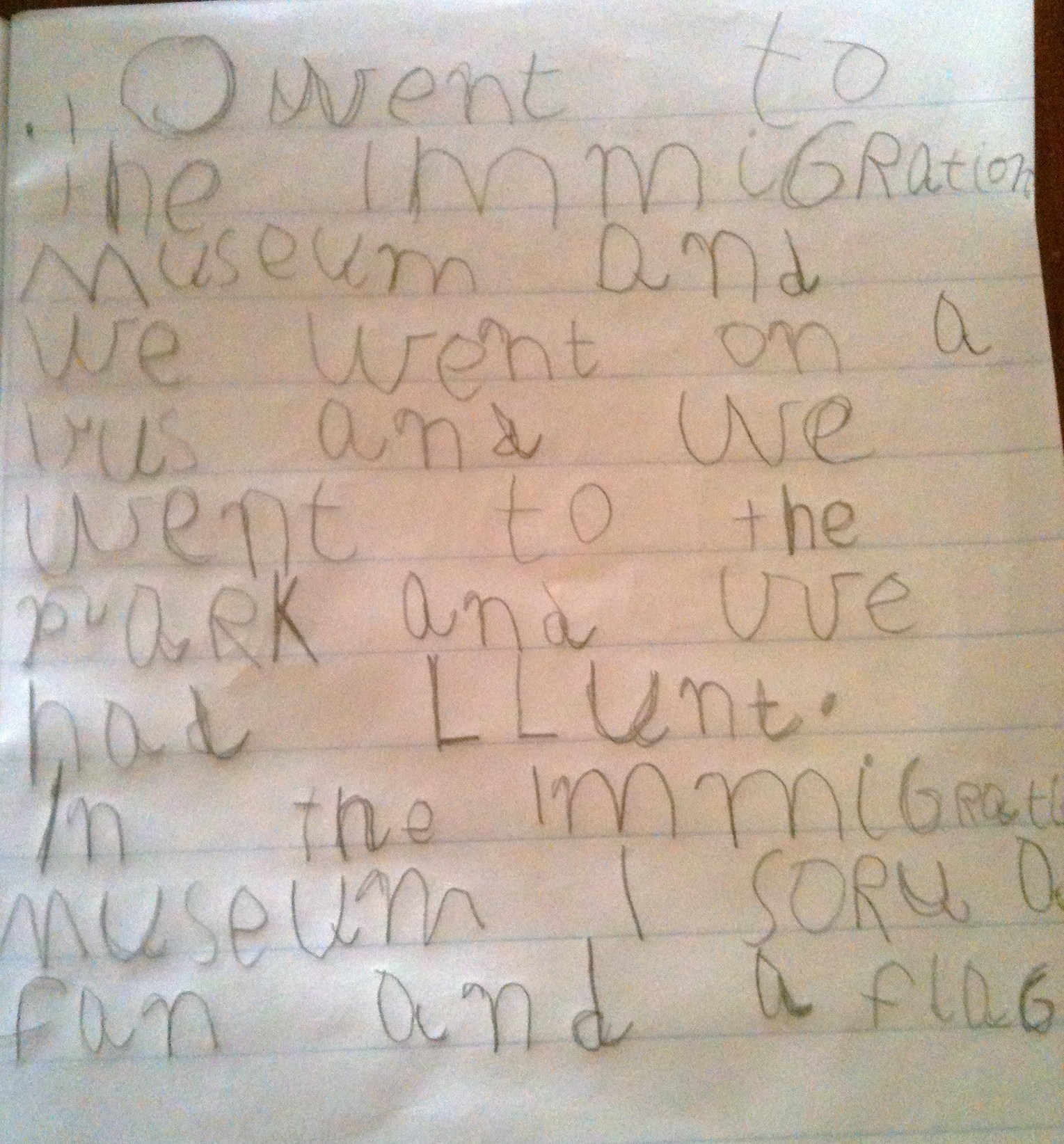
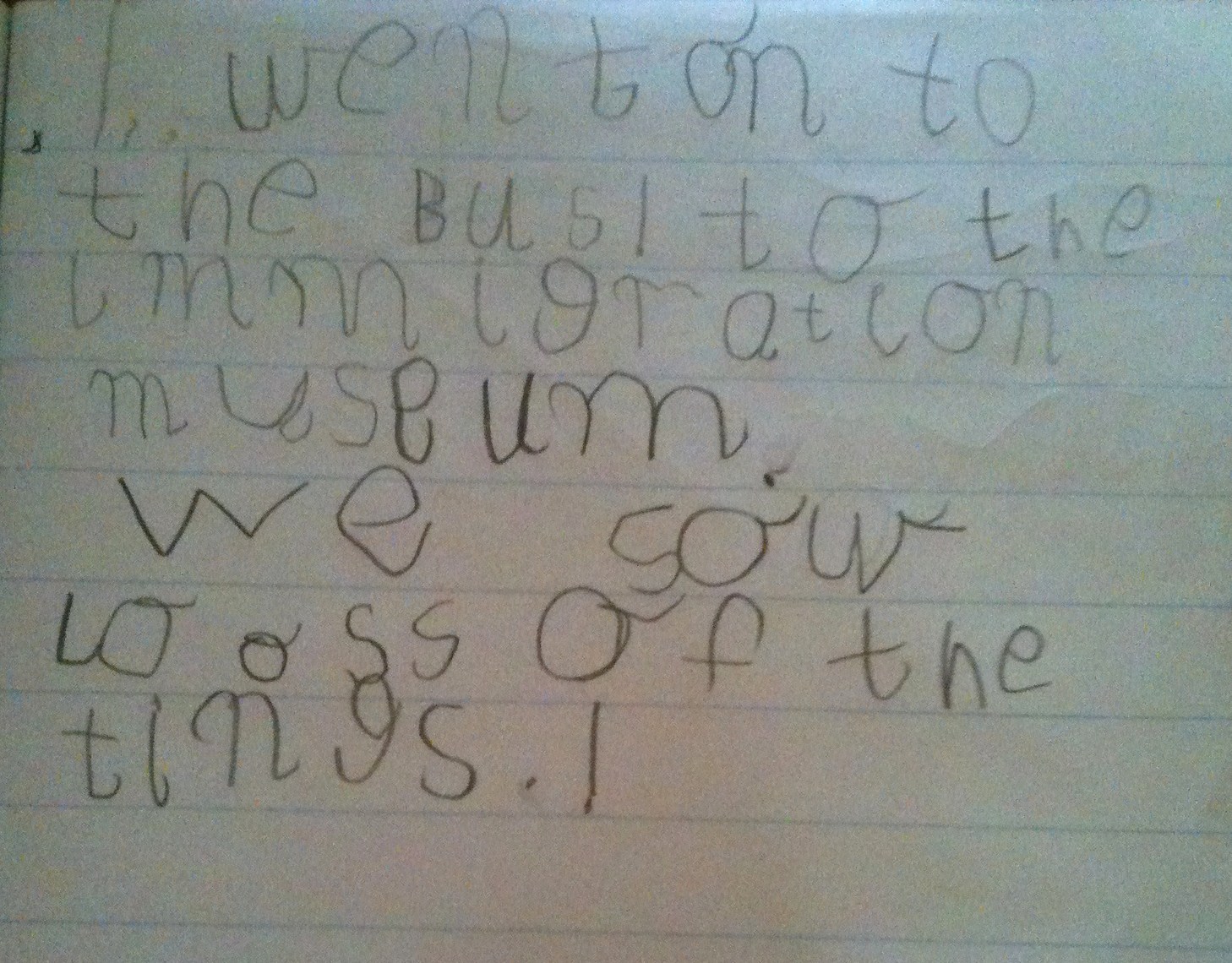
My Preps have just been on their first major whole day excursion to the Immigration Museum in the city. I’ve uploaded their independent writing about the day. To help them remember to put spaces between the words they used a small circular maths counter. This was perfect and didn’t interfere with their writing. This was so successful that my children will continue to use the space counter.


Their ‘freebie’ word for this writing piece was ‘Immigration Museum’. My Preps are using their knowledge of sounds and our THRASS chart when writing. I’m really excited by their progress. Each child is on their own journey and all are moving forward.

Cheers Nina
2 Comments

Filed under Uncategorized